A Robin's Parenting Diary
Note: This post has a lot of photos and WebPs. If you’re reading through RSS, I’d suggest visiting the site for the best experience. Also, this is my submission for the “BlogBlog Club – August 2026”. This month’s theme is “Ichigo Ichie (One Time, One Meeting)”, hosted by ikuka. If you have your own blog, come join in!
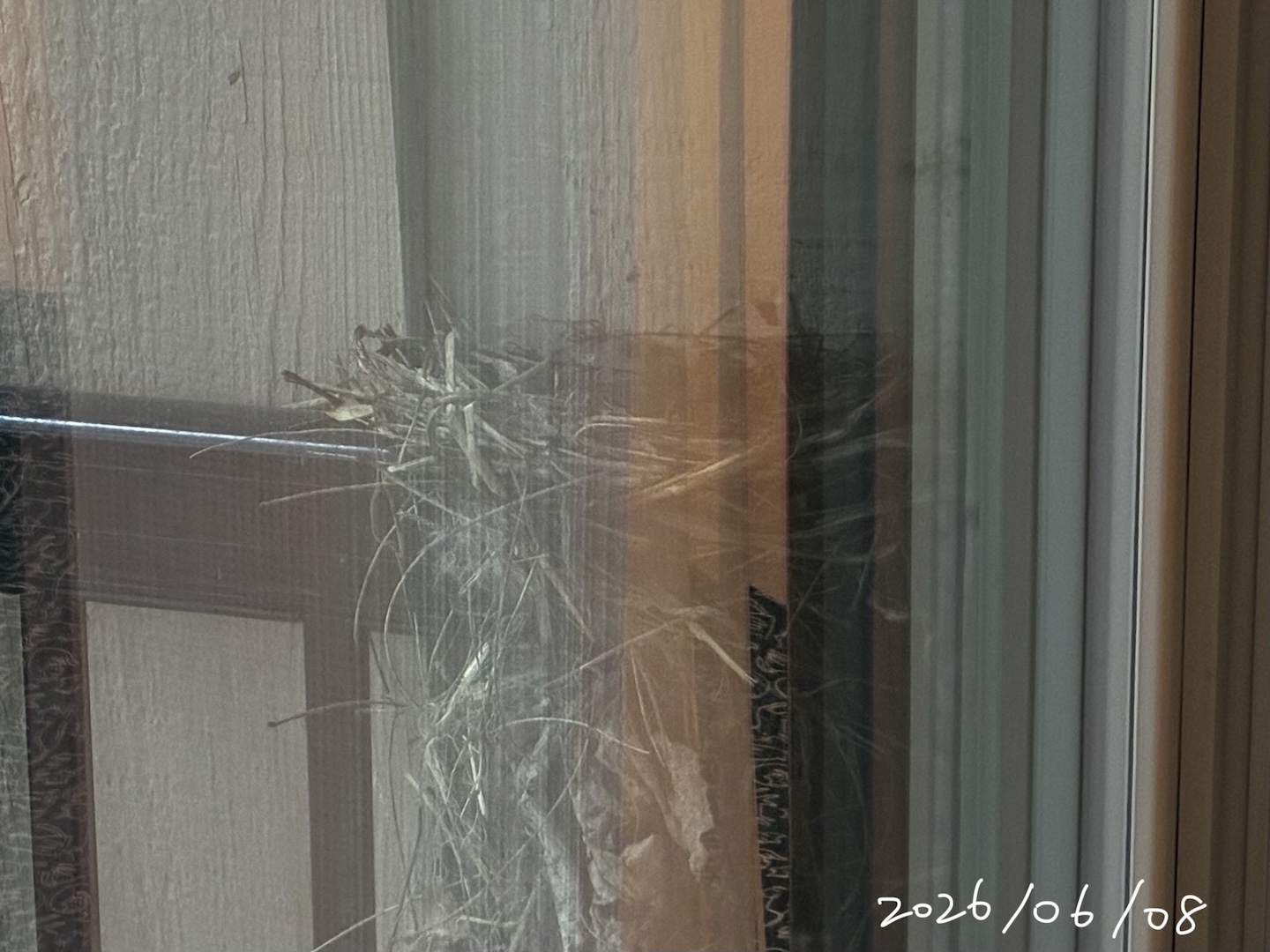
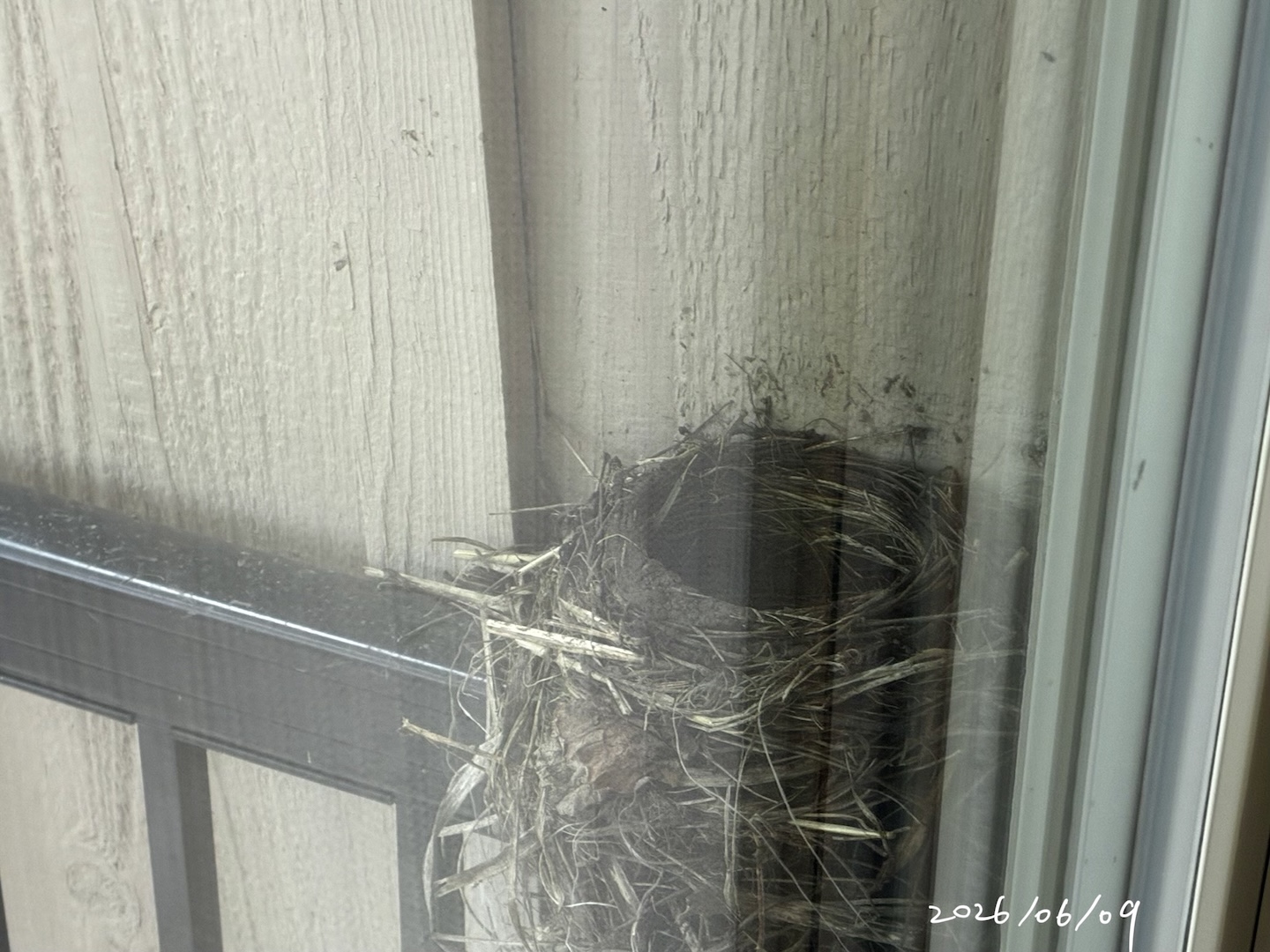
In early June, our patio suddenly gained a regular visitor: a robin. After poking her head around for a while, she started carrying materials over and building a nest on the patio railing.
Sam and I both felt honored, and a little surprised, that a robin had picked our patio as her nesting site. After all, we live in an apartment complex out of a hundred-some units, she chose ours. Pretty amazing.
And so we went into the Airbnb business! Though our guest had to build her own room and catch her own breakfast lol
Every day our little neighbor diligently hauled in all kinds of materials, mostly grass and mud, sometimes a scrap of plastic — though plastic was hard to anchor, and after it fell off several times she gave up on it. One day, right around when the nest had taken shape, a storm blew in with fierce wind and rain. I have to say, she picked an excellent spot: the nest sat right under the eaves, tucked out of the wind, solid as a fortress and not budging an inch.
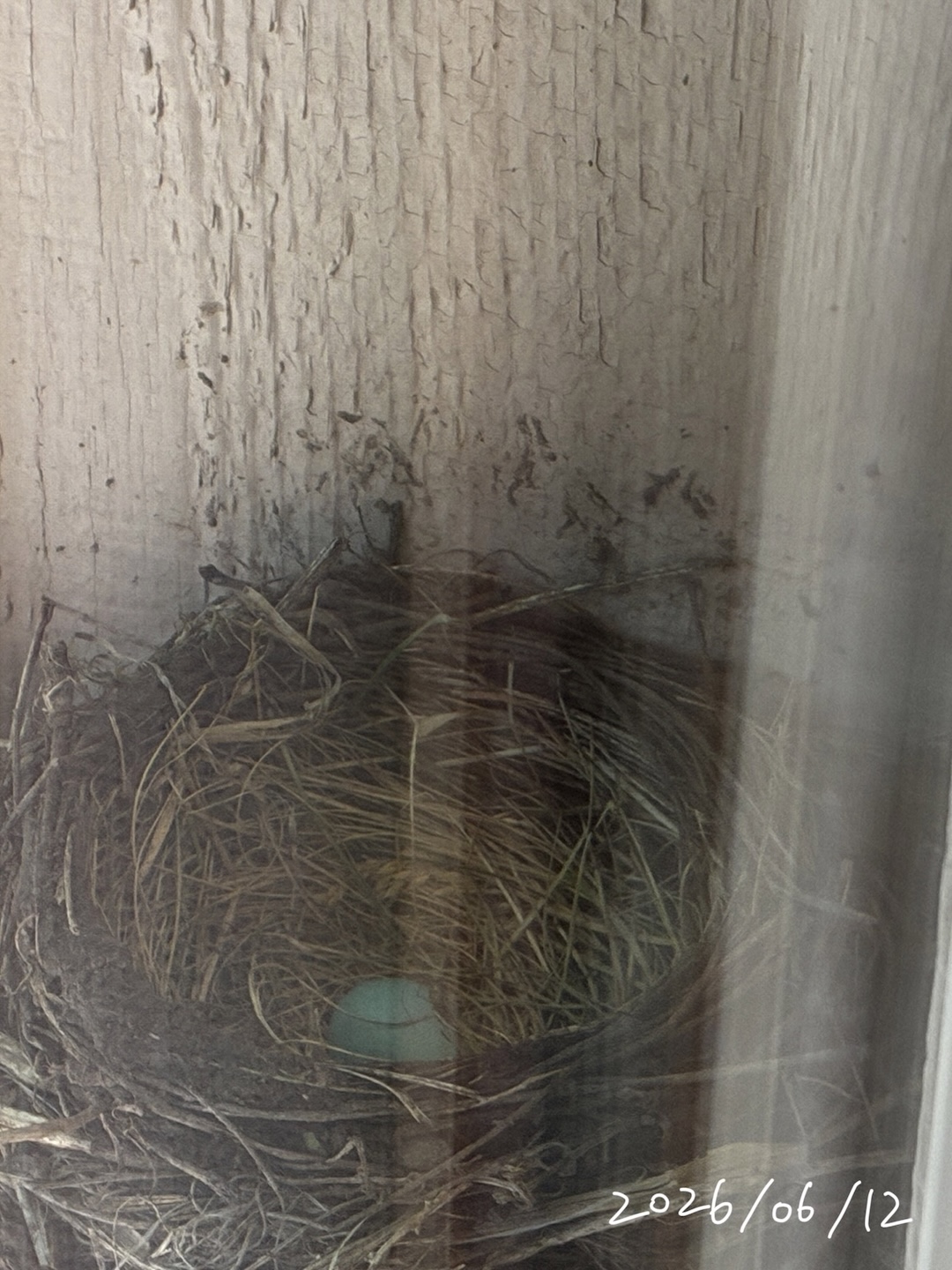
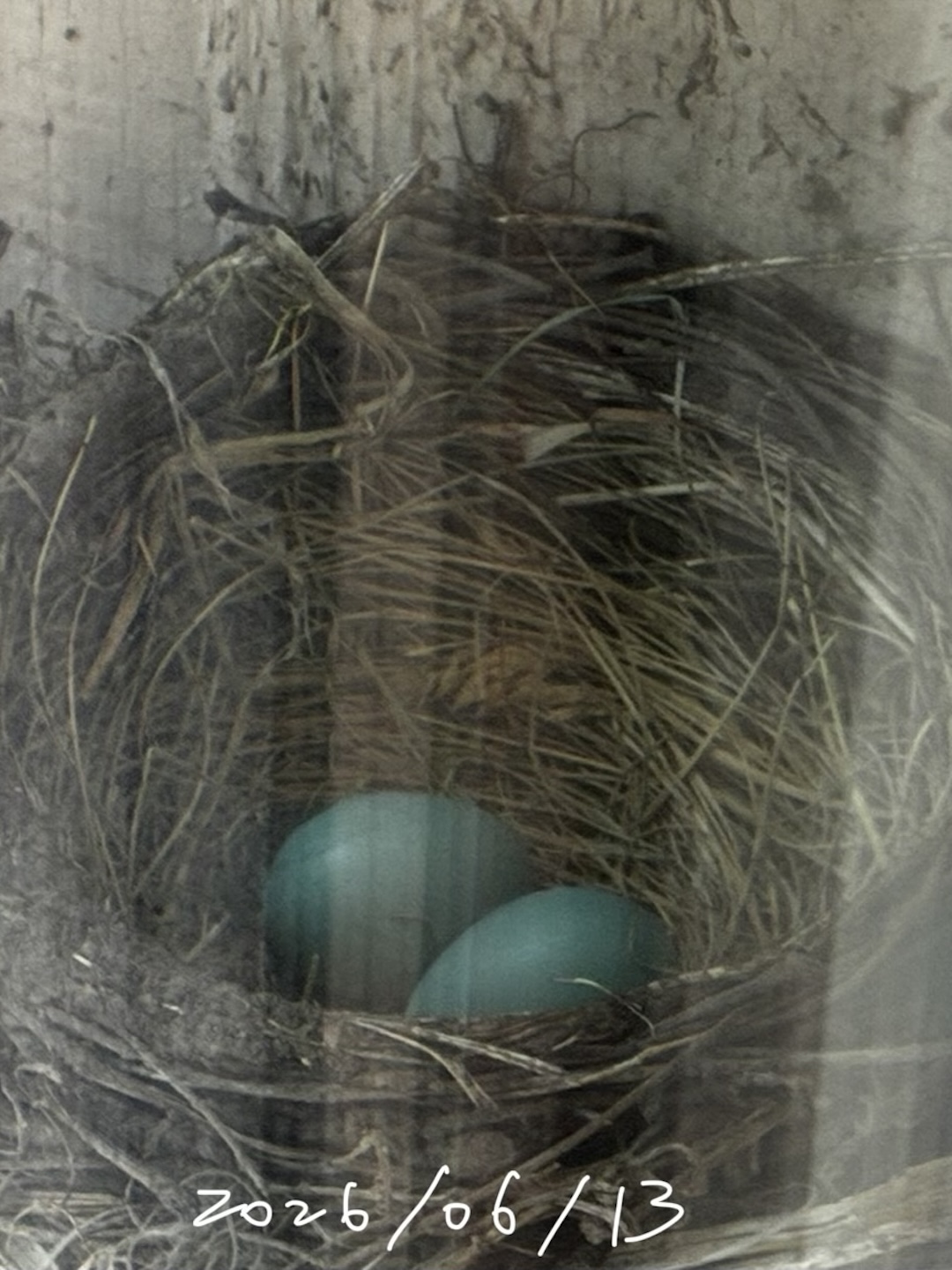
A few days later, our little neighbor came back safe and sound and settled into the nest to wait. Then came one egg a day, and four eggs in four days. While she was out foraging, I took photos through the sliding glass door, and found that the eggs really are the dark blue-green so many sources describe, with a mysterious, dreamlike sheen to them. No wonder Tiffany chose it as the color of their brand.
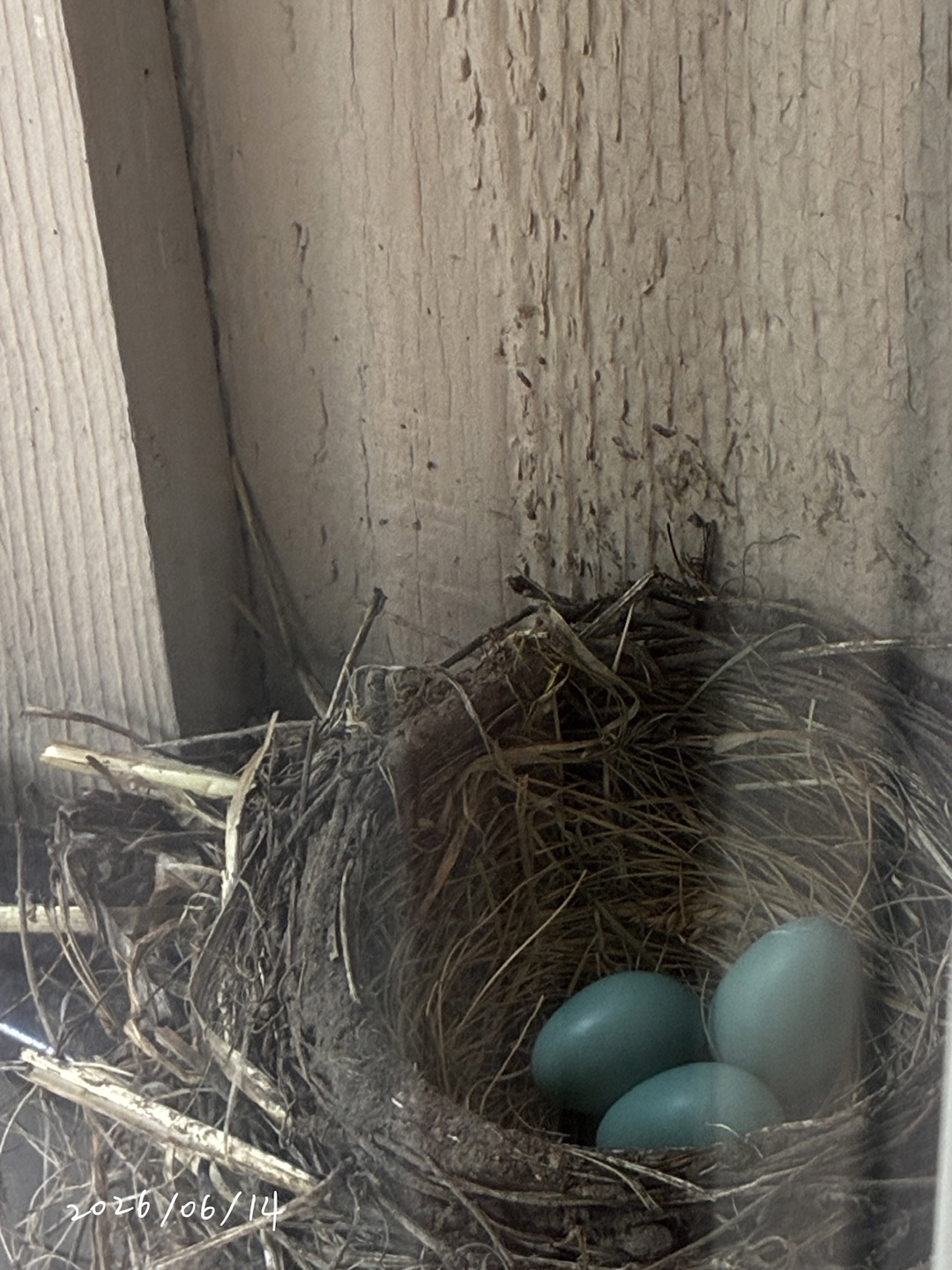
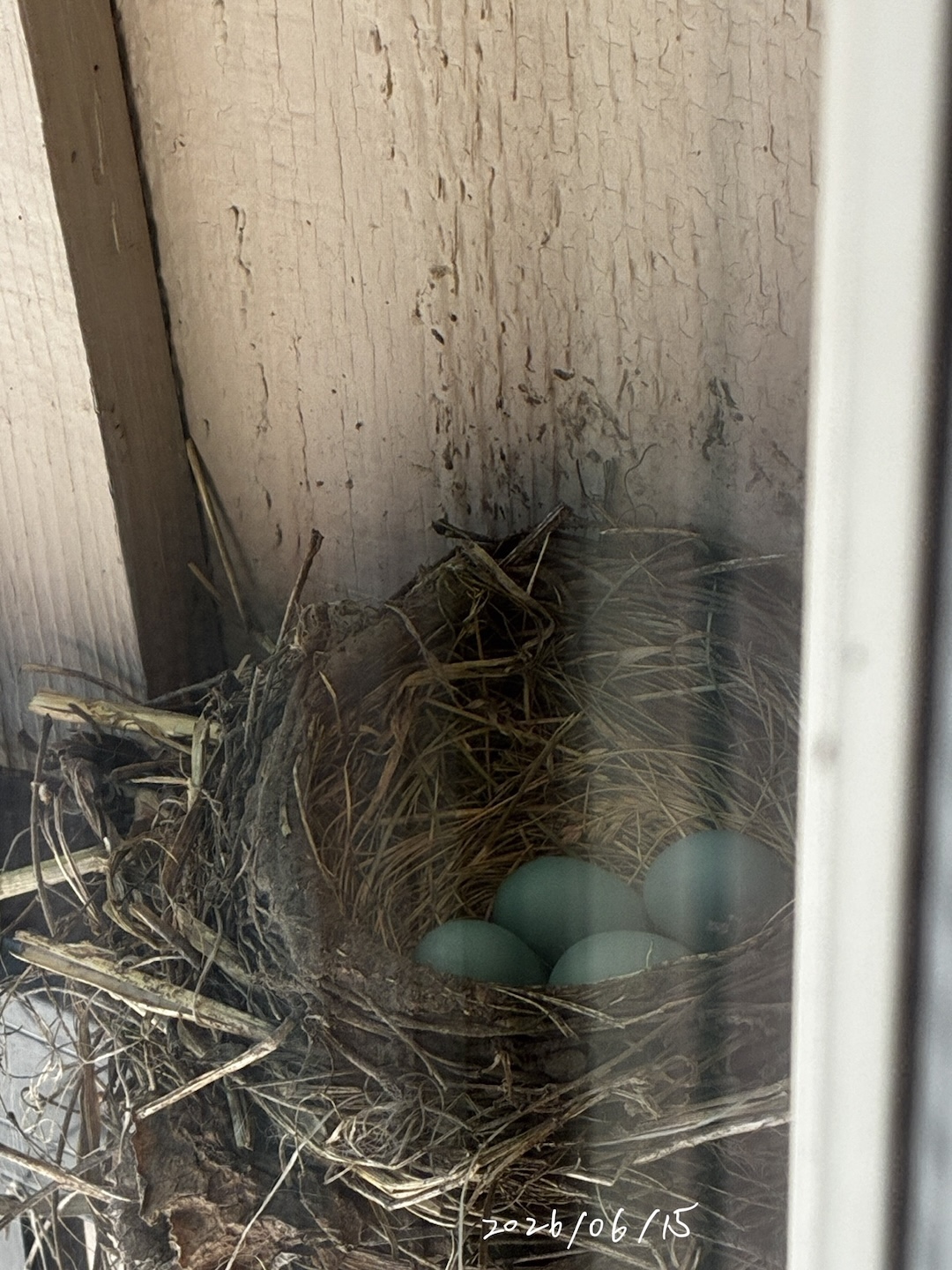
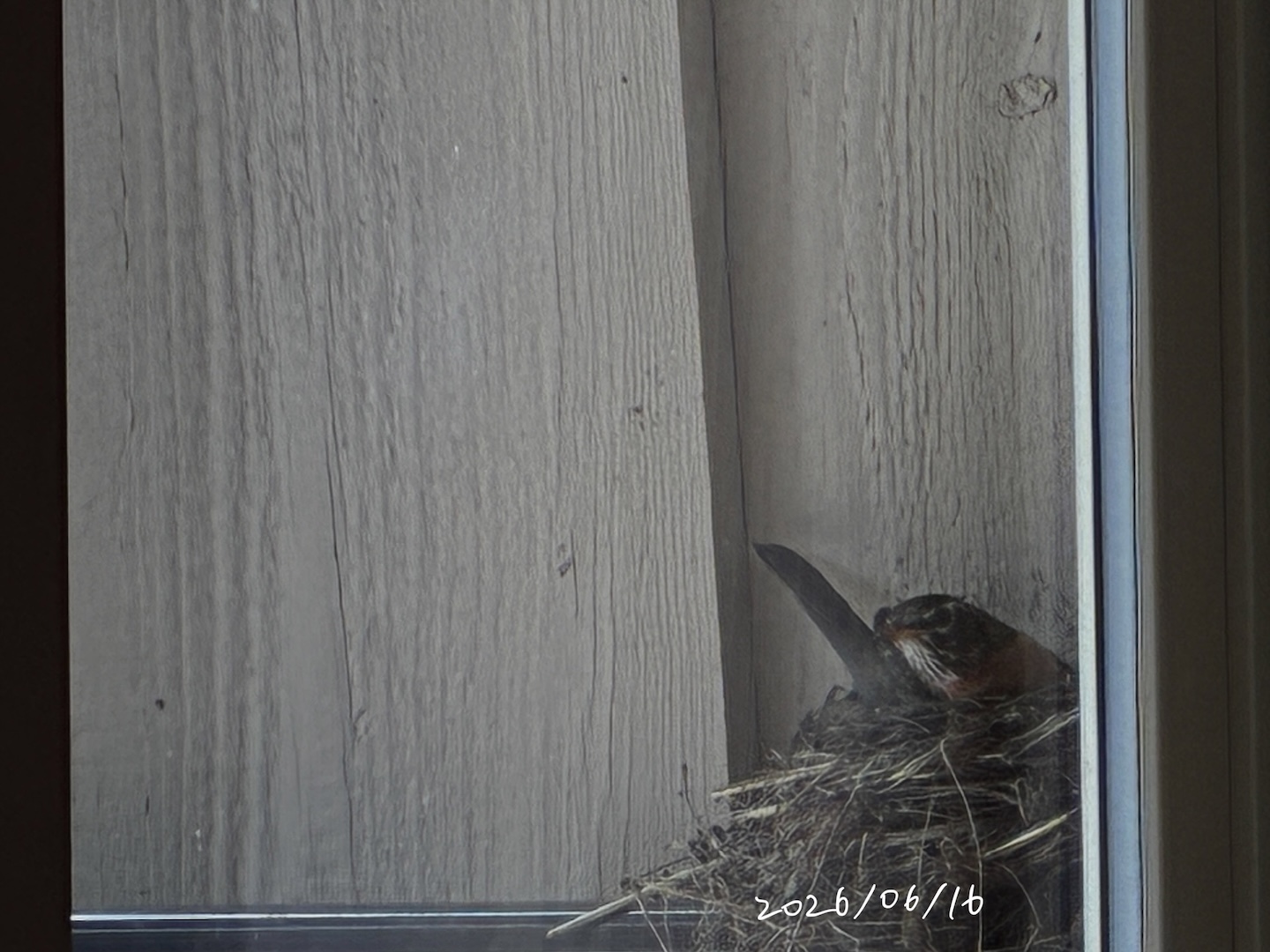
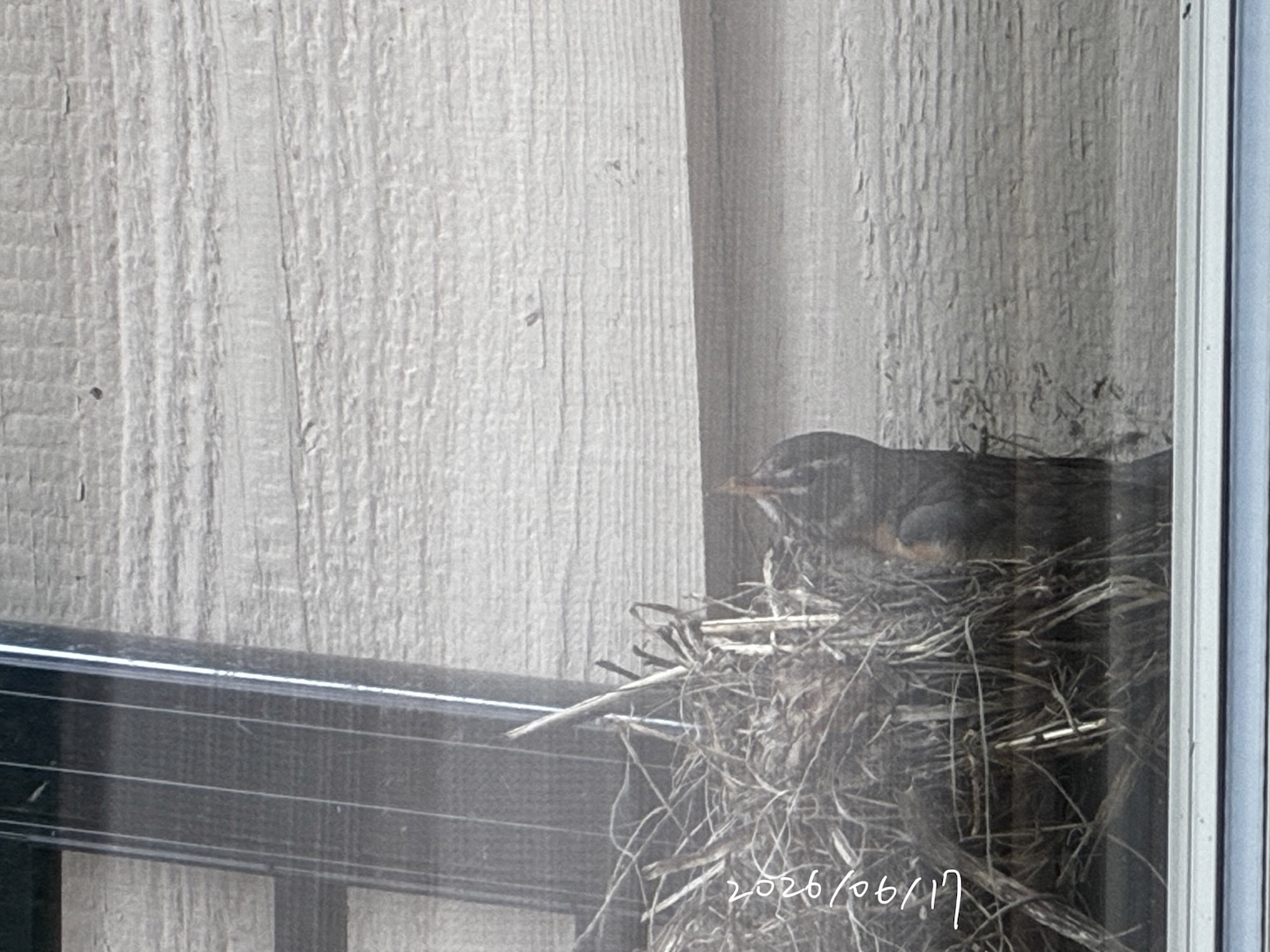
The incubation went on and on and on. Our little neighbor often sat in the nest without moving at all, flying off only briefly when she needed to eat. Mostly she just gazed out at the view beyond the nest, occasionally squinting into a doze, occasionally locking eyes with me on the couch.
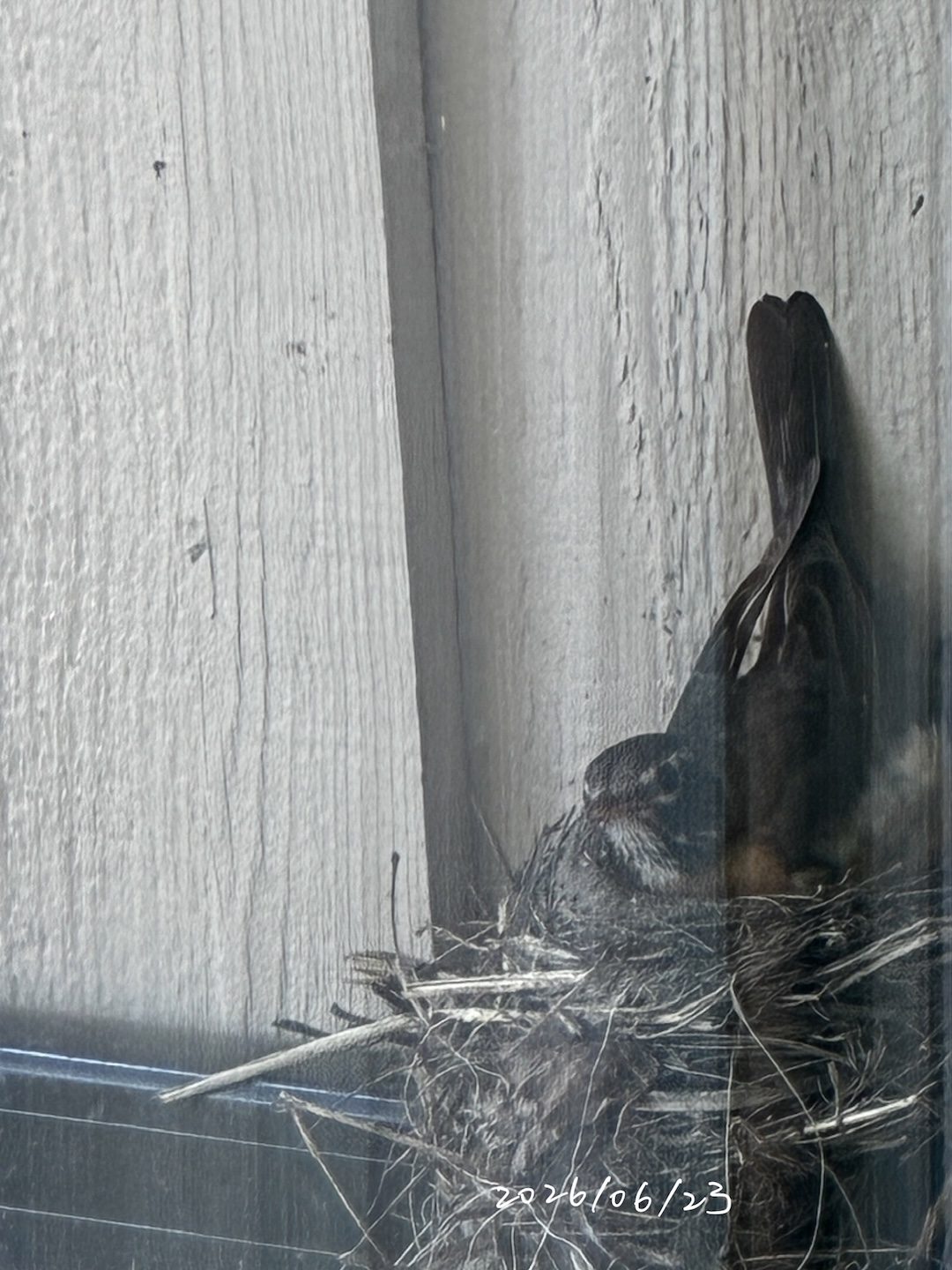

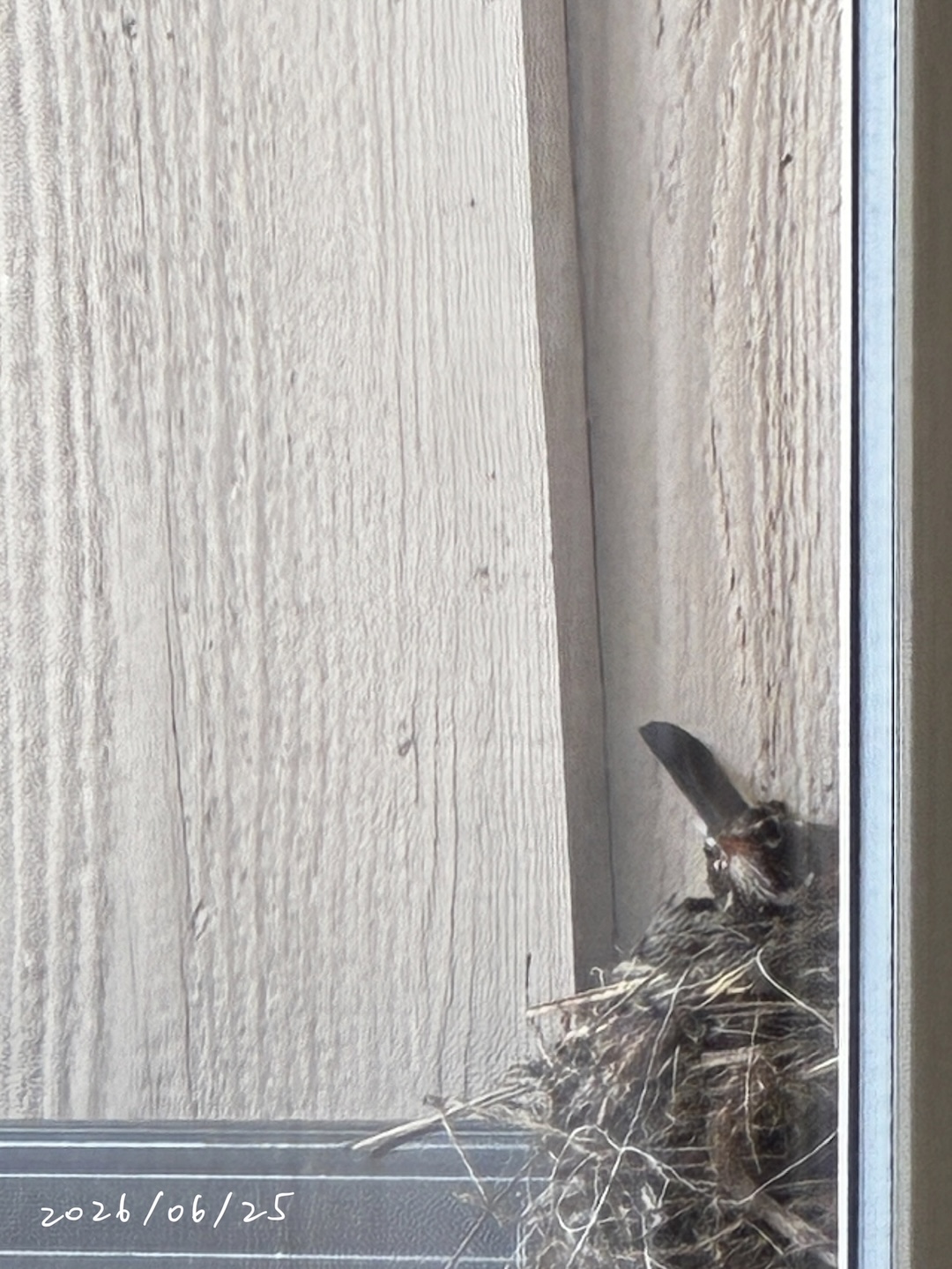

One day, while our little neighbor was out, I craned my neck over the nest and saw a mass of pink flesh squirming around. The chicks had hatched! A few days later, the number of moving things in the nest went up. But no matter how many times I counted, there were only ever three chicks. There had been four eggs. How could one have gone missing? Not even a shell left behind. I looked it up and learned that the fourth egg may simply never have been fertilized, so she threw it out; of course, there might also have been an egg thief, though I never saw one.
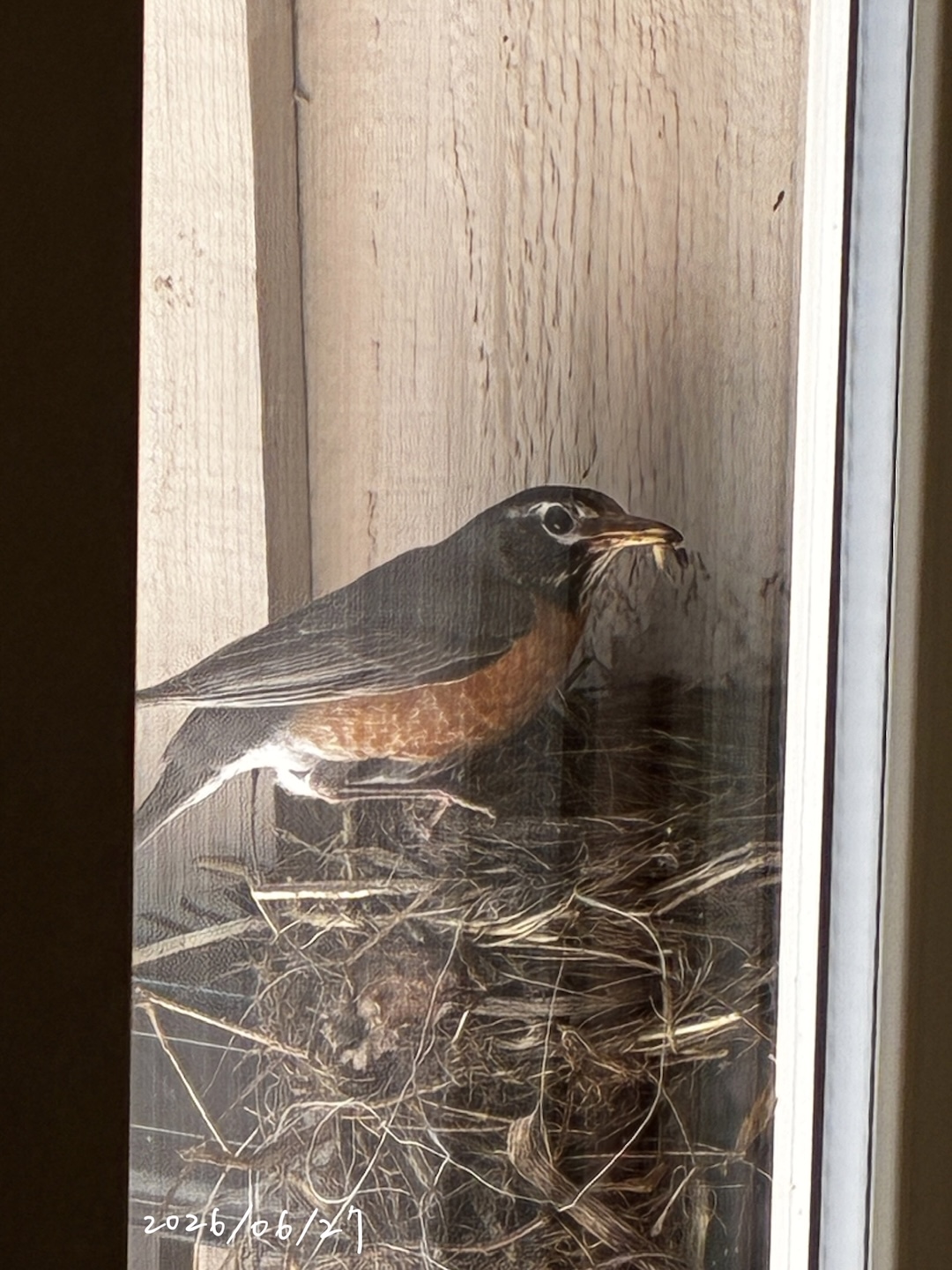


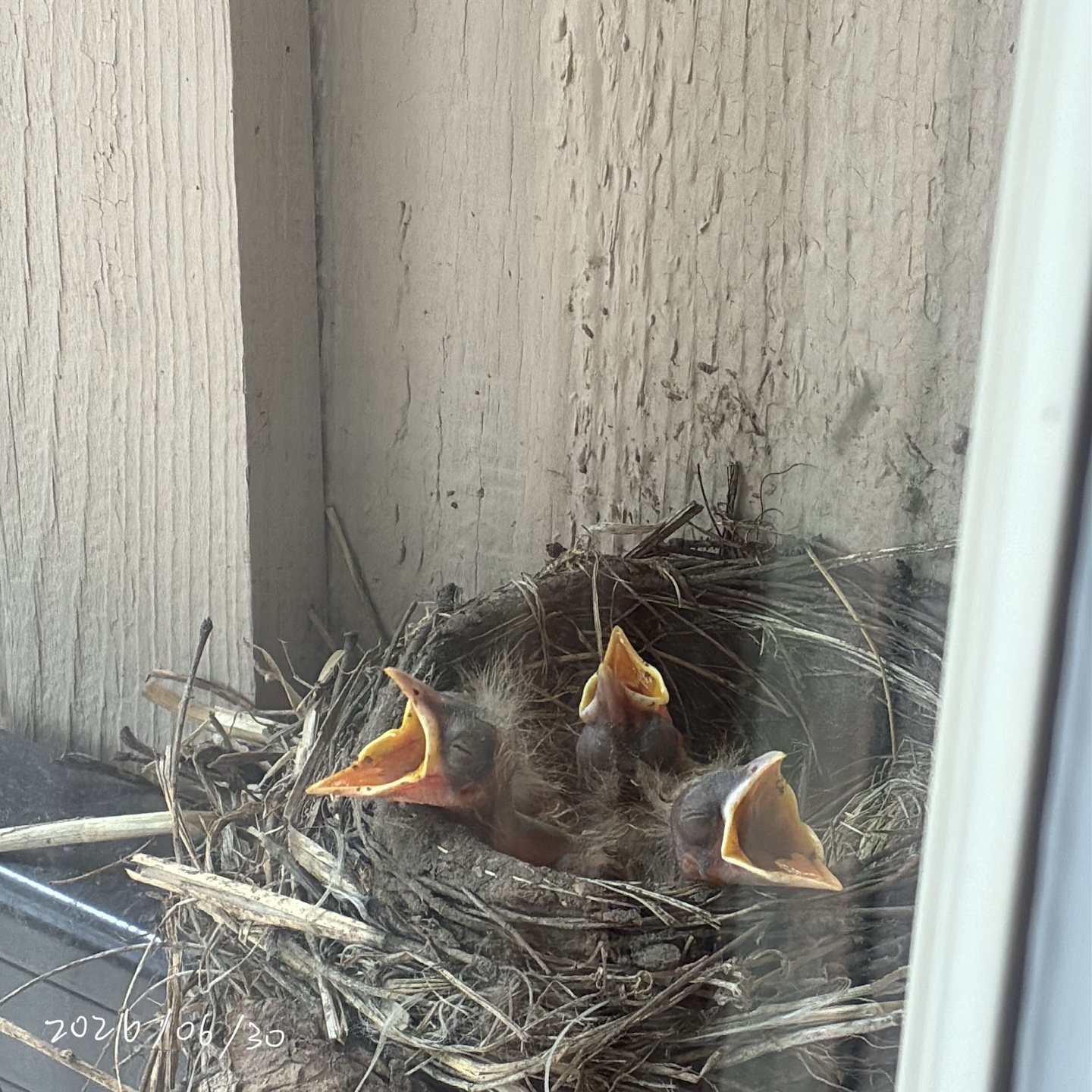
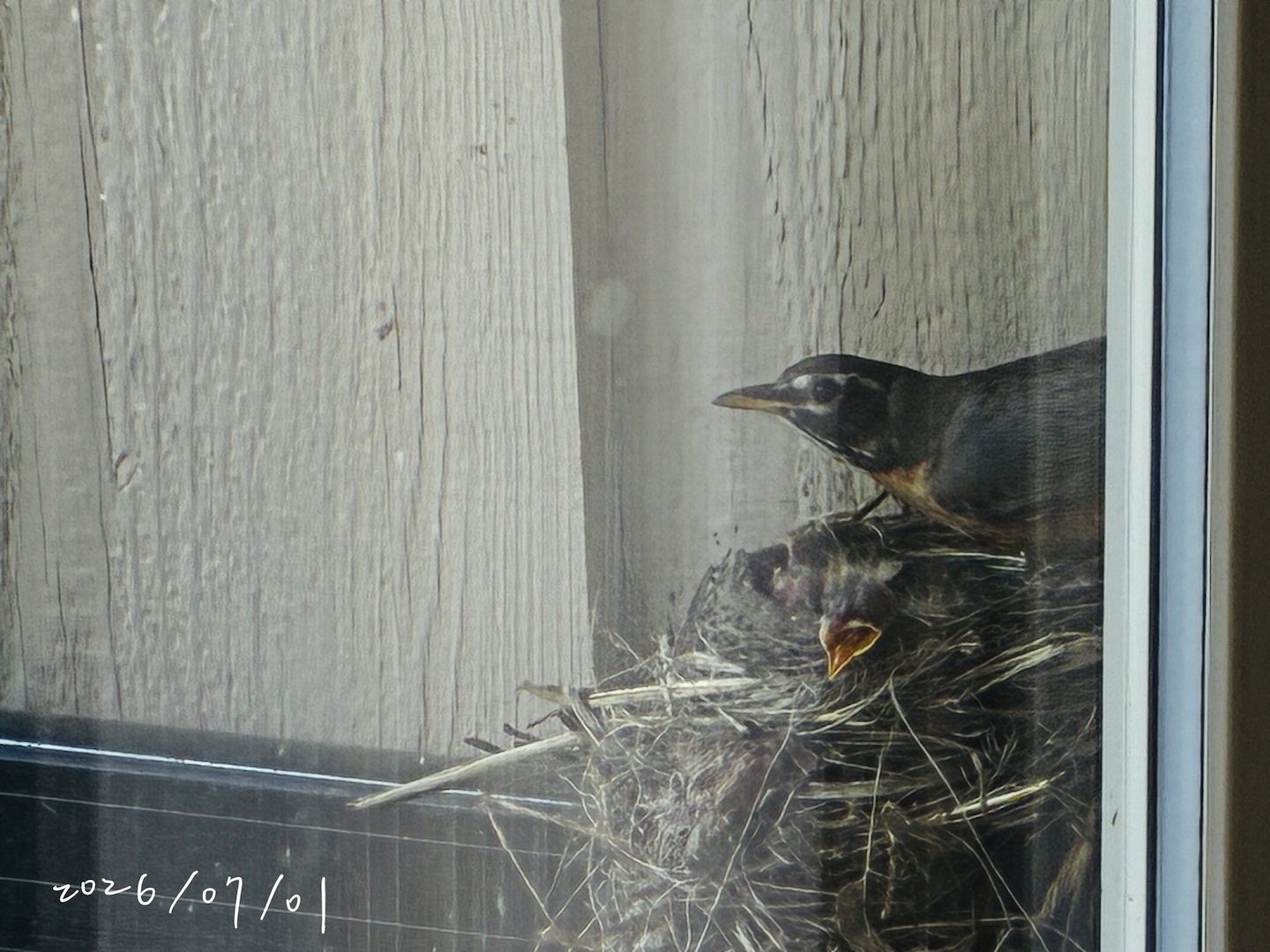
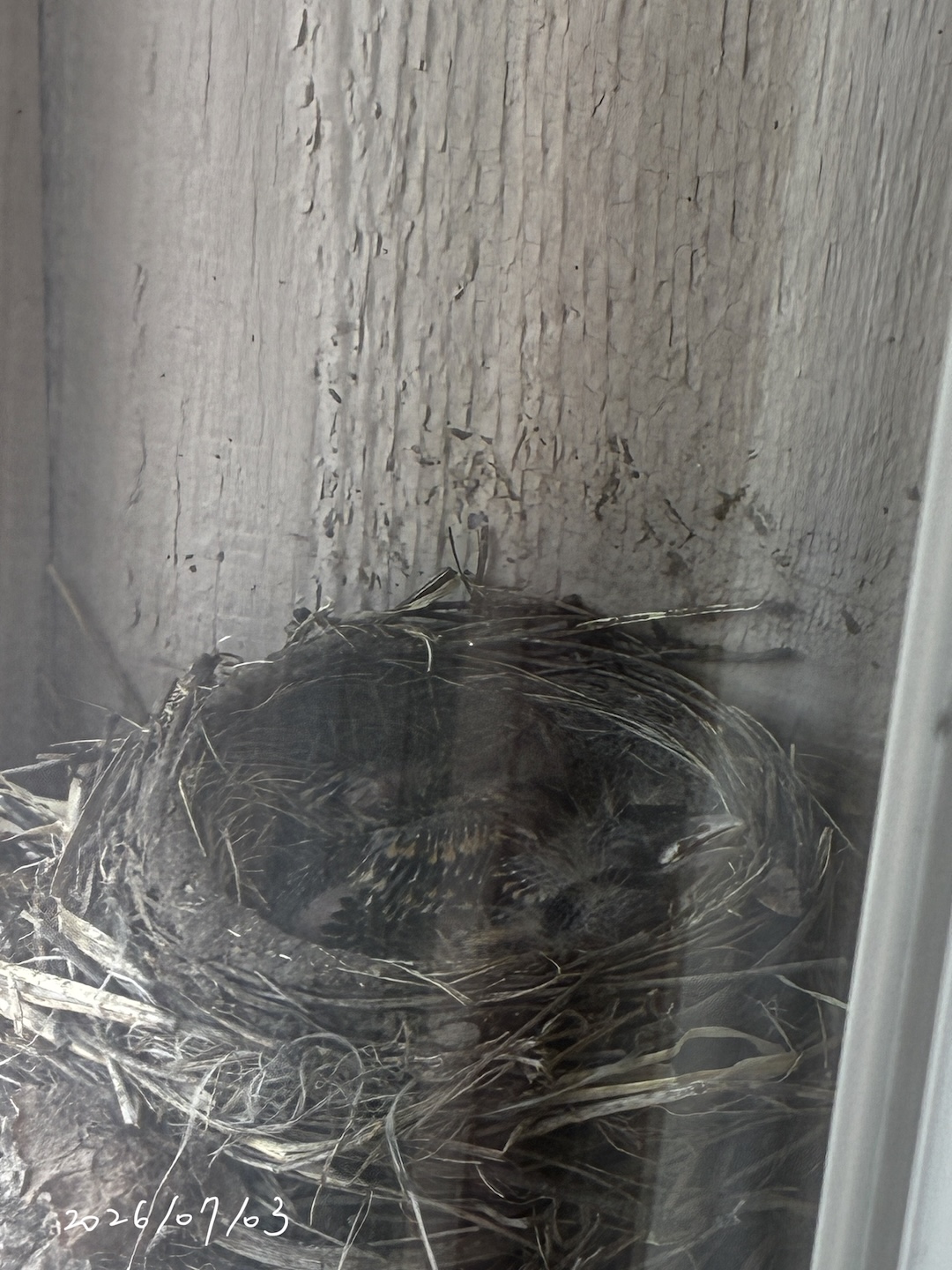

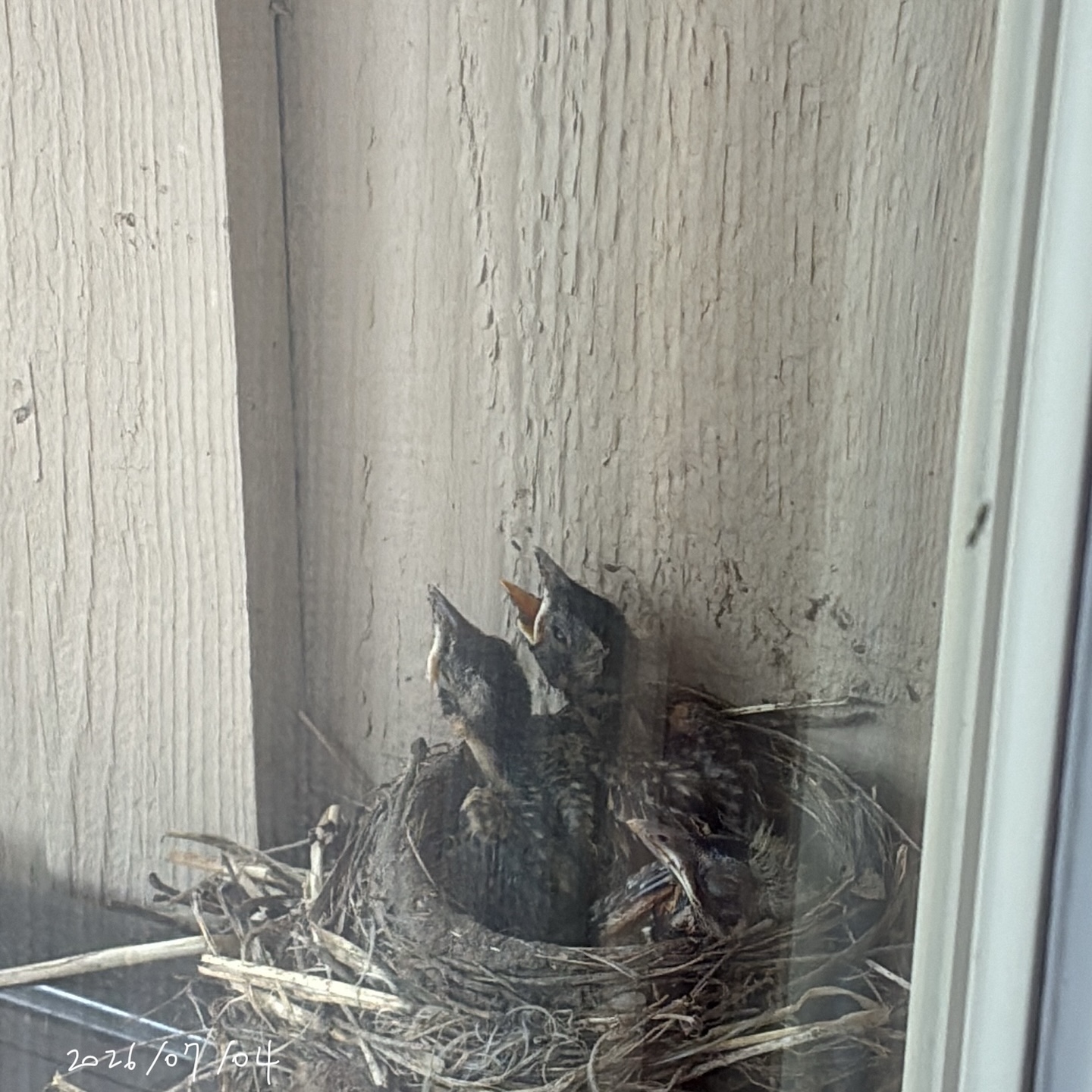
The three nestlings slowly grew up in the nest. Every day the mother worked hard catching bugs to feed the kids, and now and then the father came to help out. When the chicks opened their mouths, the width was about the size of their whole bodies. All day long they were either eating or sleeping, pretty much like human children. Their growth rate was astonishing: from soft little lumps fresh out of the shell to leaving the nest took only two short weeks, and their feathers came in over the course of a single night. If human children grew that fast, parenting would be so much easier.



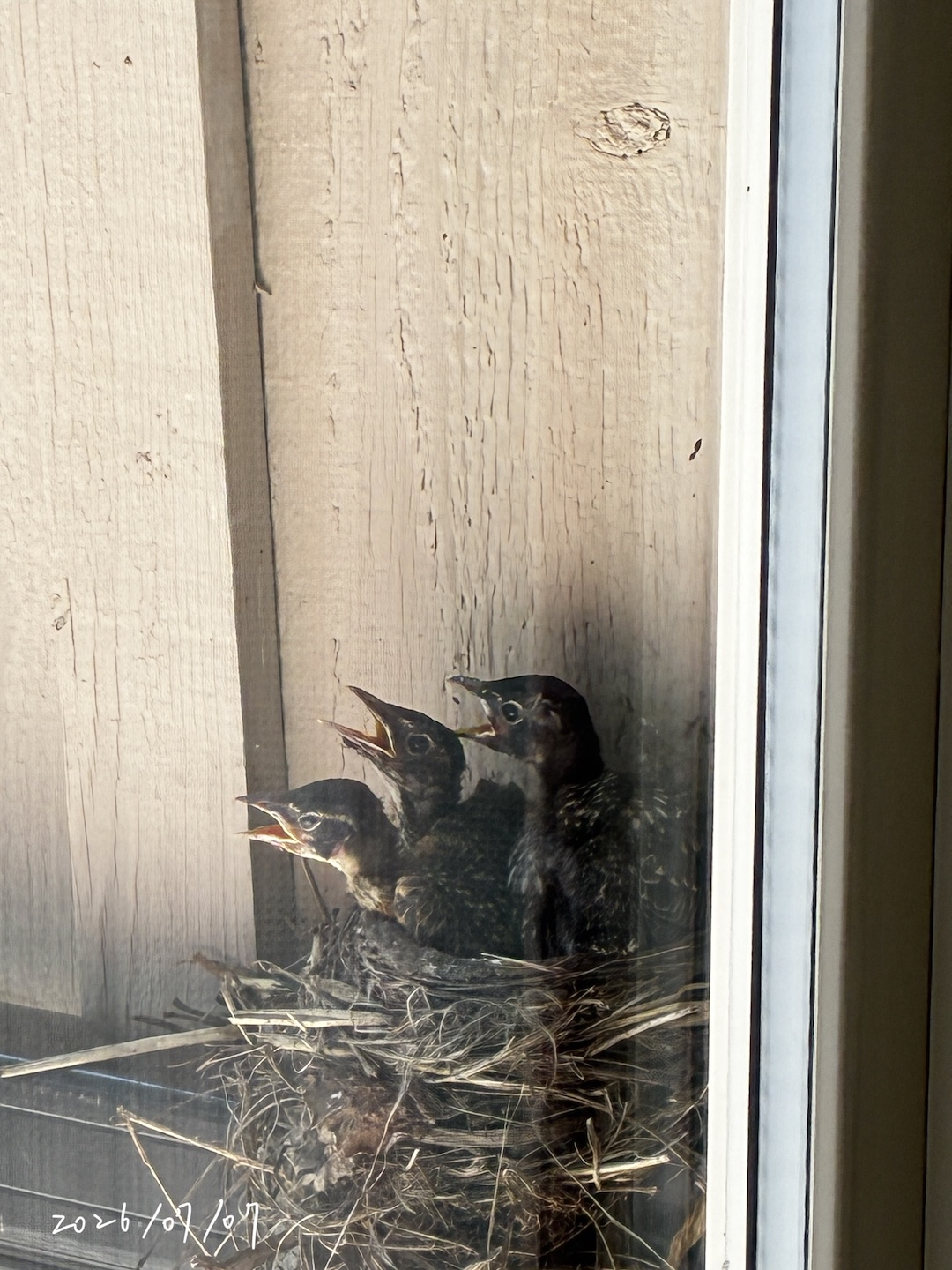
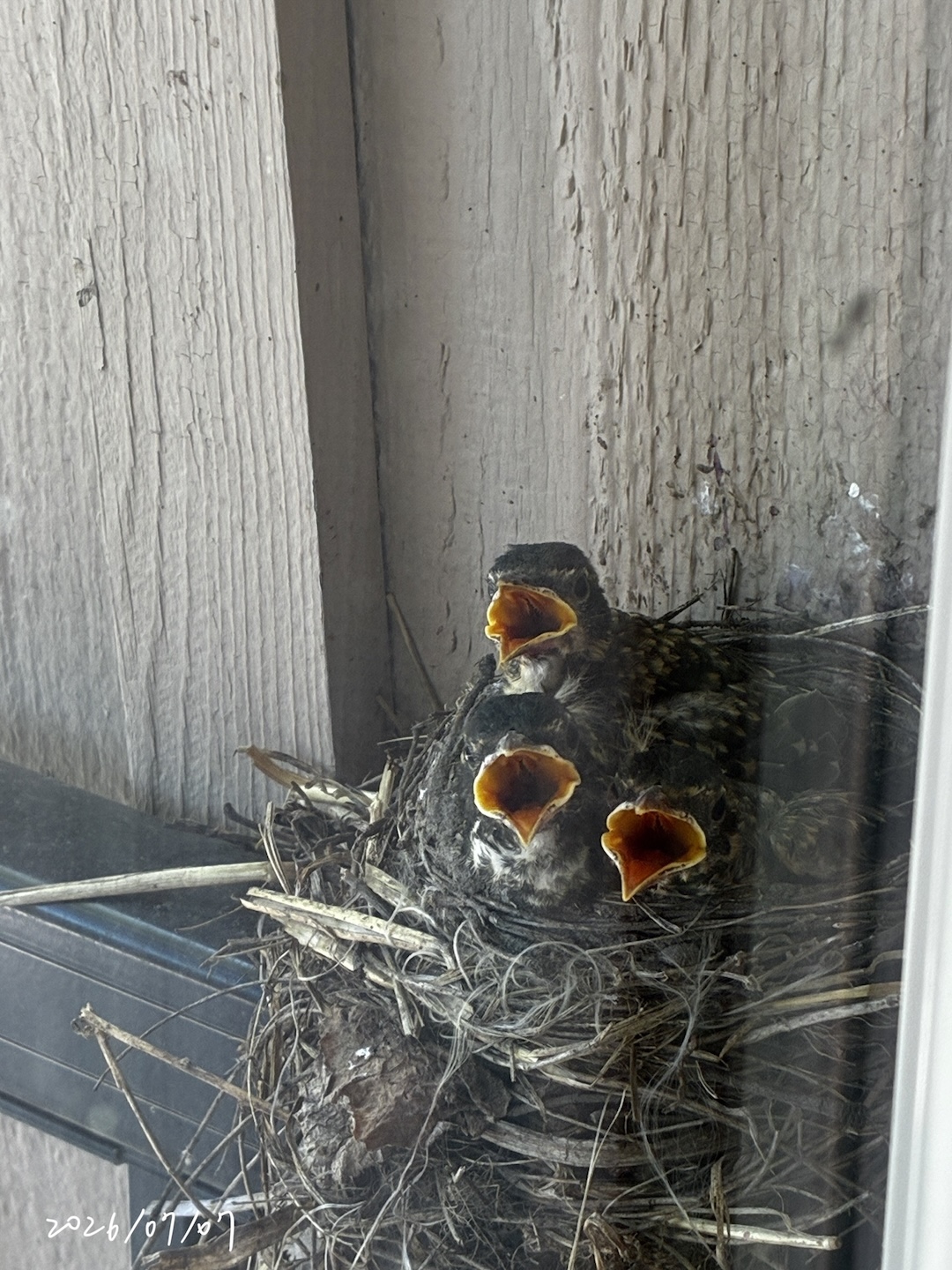
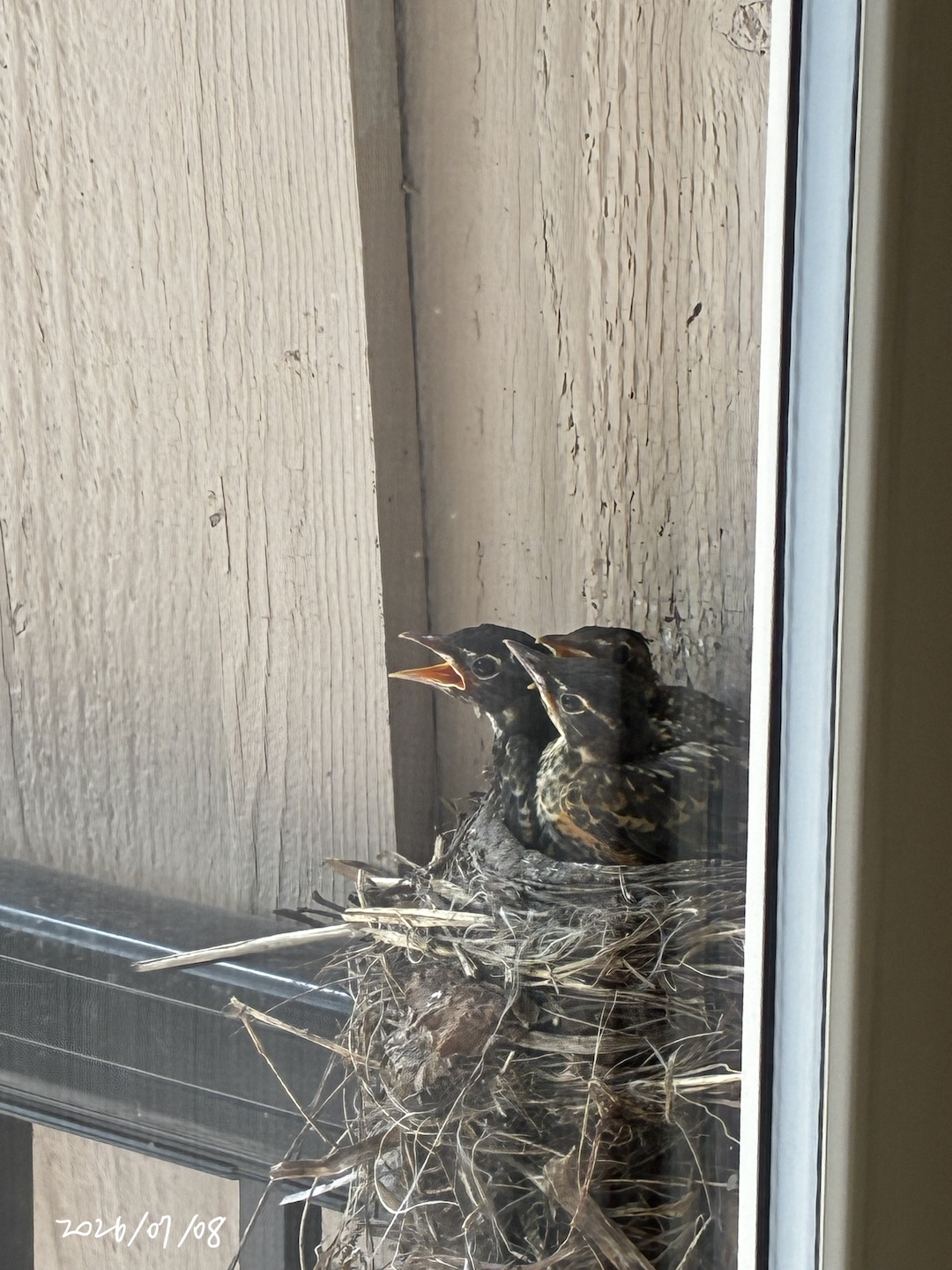

On the day the chicks left the nest, their parents flew off first and called to them from the big tree on the lawn out front. One by one, the three chicks stood up in the nest. The first flew from the nest onto the balcony, then from the balcony down to the lawn, with almost no hesitation at all. A naturally gifted student! His dad (or was it his mom?) flew down to meet him and walked ahead to guide him, and the chick followed along closely, learning as he went, running and flying by turns. So cute. The second one followed him down before long. Only the third one who probably took a tumble on the way out (that’s the birdie doing the pratfall below) seemed pretty traumatized by the whole idea of flying, and paced around the patio for ages before finally taking off.
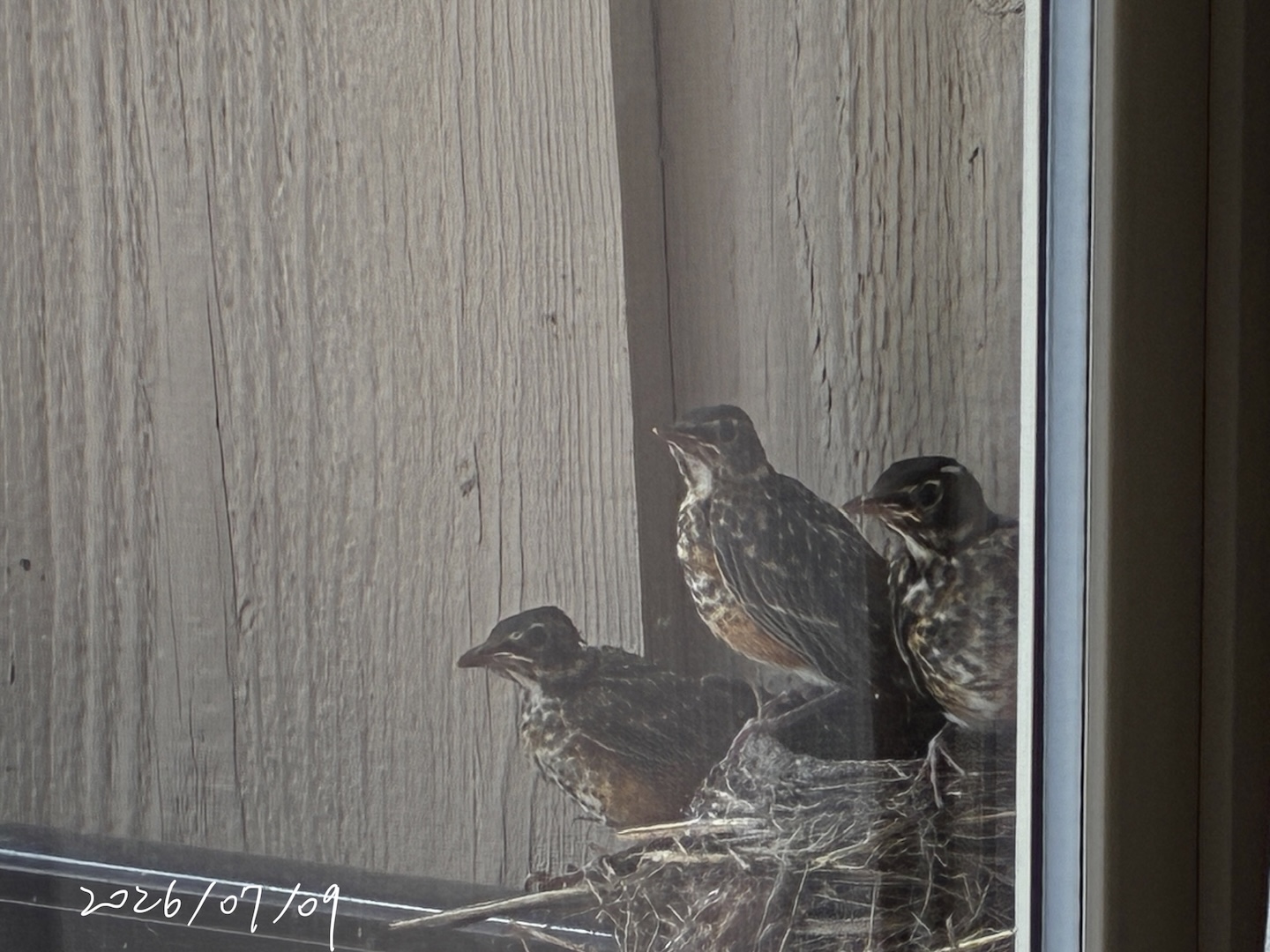
Watching the robins grow up made me think of the Chinese saying “their wings have hardened, so now they have to fly”(翅膀硬了就要飛了), which usually comes out of the mouth of an exasperated parent, and means that the child won’t follow their orders or their plans anymore. But I’ve come to think it shouldn’t be a negative, disparaging phrase at all. It should be neutral, or even hopeful. After all, birds are born to fly. If those chicks never flew out of the nest, the three of them would have had a miserably cramped amount of room, squeezed into one hot little nest, and their parents would have worn themselves out hauling in bugs every day.
What’s more, the parents who use that line to scold their kids usually don’t know how to guide them well either. The robin parents didn’t just let their kids fly off and then wash their hands of the whole thing. During the transition, they stood out in front of the chicks and showed them how to walk, how to fly, how to hunt.
I hope every human kid gets parents like those robins. Parents who hold a positive attitude toward “their wings have hardened, so now they have to fly,” can say to their child: “Your wings will get stronger little by little, and then you’ll be able to fly up to the big tree, up into the clouds, just like us, and see a whole different view!” And who know when to stop feeding, when to stand on the treetop and encourage that first step out, and how to guide from up ahead through all the stumbling.
The world would be a much more peaceful place if that happens.
Afterword
After our little neighbor and her family left, sometimes I’d be out walking and can’t help wondering: is the robin in front of me one of theirs? (Though even if it were, I’d never be able to tell.) Other birds may nest at our place in the future, but it won’t be that first, most thrilling time. Meeting our little neighbor and her family really was a once-in-a-lifetime encounter.
NB: This article was first published in Chinese on 08/04/26. It was later translated with assistance from AI tools, edited by me, and published in English on 09/09/26.