
This is my submission for the January 2026 BlogBlog Club Party. Everyone is welcome to join the party!
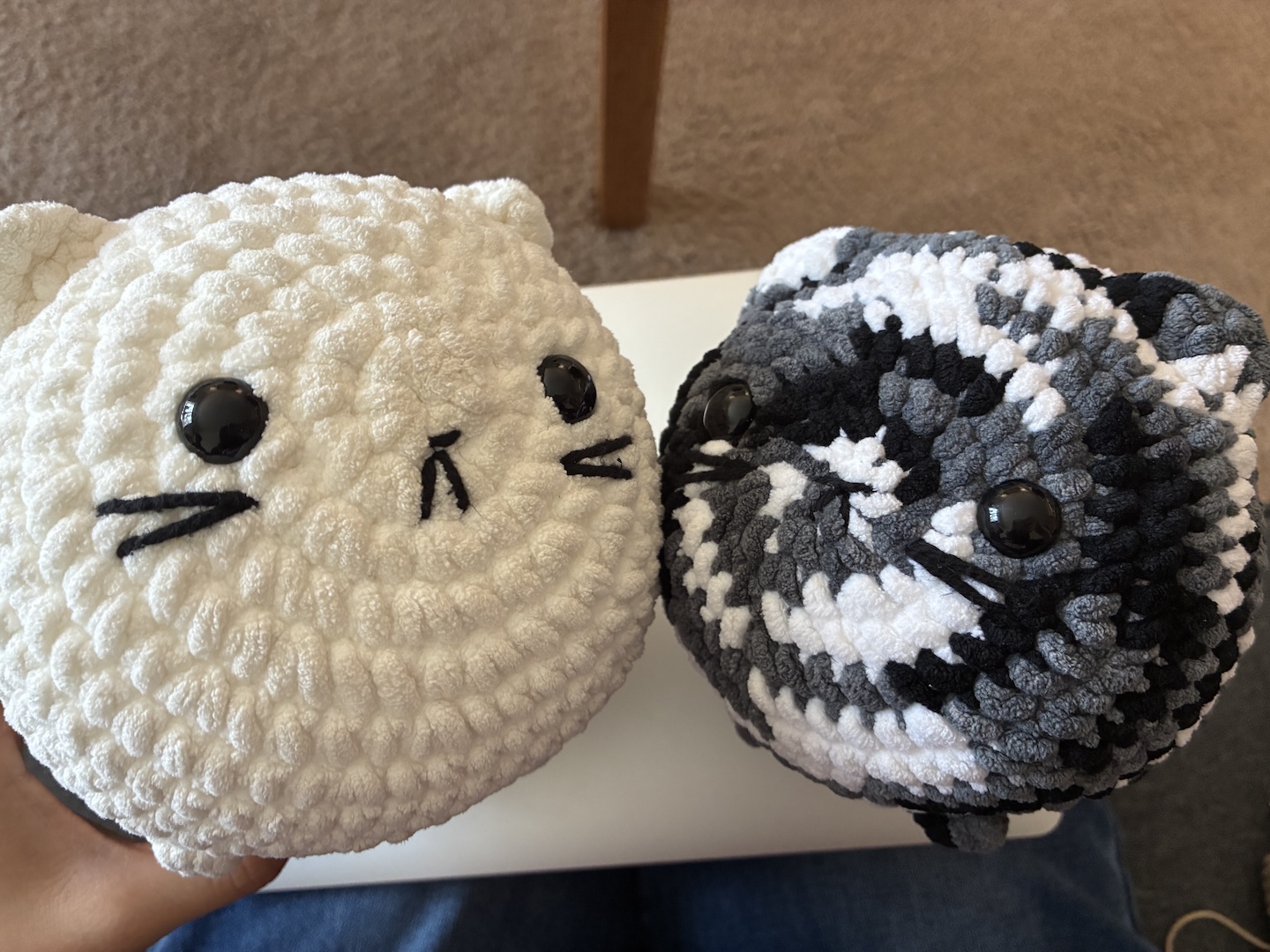
“Hey, Udon! We have guests! Come say hi!”
“Wait, let me go get Sesame so we can say hi together! Se-sa-me~~~”
“Udon, you’re being so loud, I want to sleep a bit longer…”
“Hurry up, Udon and Sesame! Our guests came specifically to see you today!”
“What! Really? We’re coming!”
How I Fell Down the Rabbit Hole
How did I get into this? Actually, nobody pushed me—I jumped in all by myself.
Once while browsing a craft fair, I saw someone selling various crochet works. Among them were adorable little things just like Udon and Sesame. One cost forty-five dollars. I was tempted, but I couldn’t quite bring myself to spend that much. Suddenly, a lightbulb went off: “Why don’t I try making one myself?” And just like that, I fell into the hole.
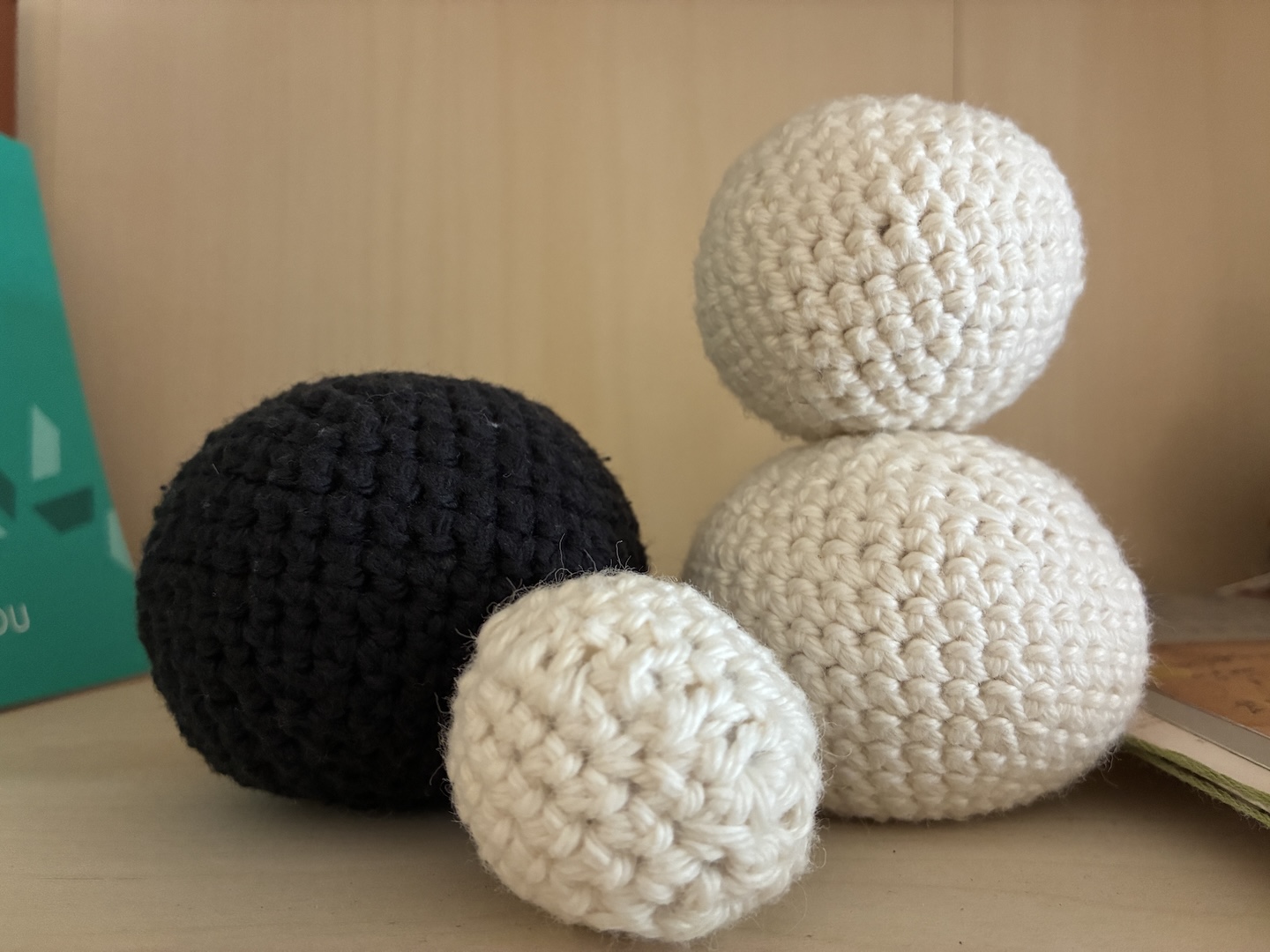
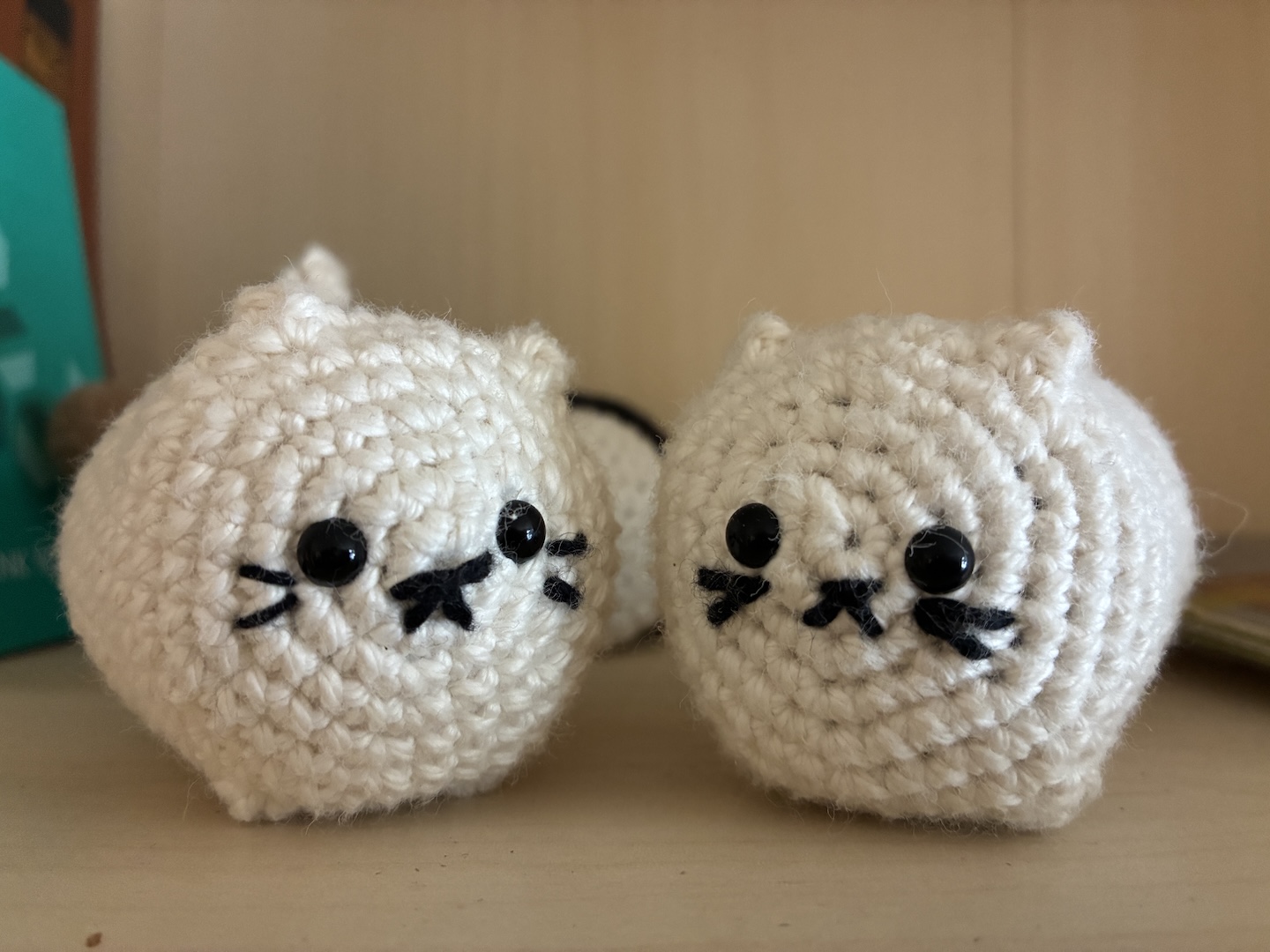
At first, I was worried I wouldn’t stick with this new hobby. So, I went to a physical art supply store (the now-defunct JOANN, RIP) and bought a single 2.5 mm hook and a tiny bit of yarn. I started learning the basic stitches from YouTube. Among all the tutorials, Eveline’s (艾織) explanations were the clearest. Her beginner videos are filmed with great detail, and her delivery is very easy to follow. I started by learning to crochet a flat square, then a bunch of small balls, then I challenged myself with a tiny kitty. Feeling confident, I finally started the “Loaf Cat” project!
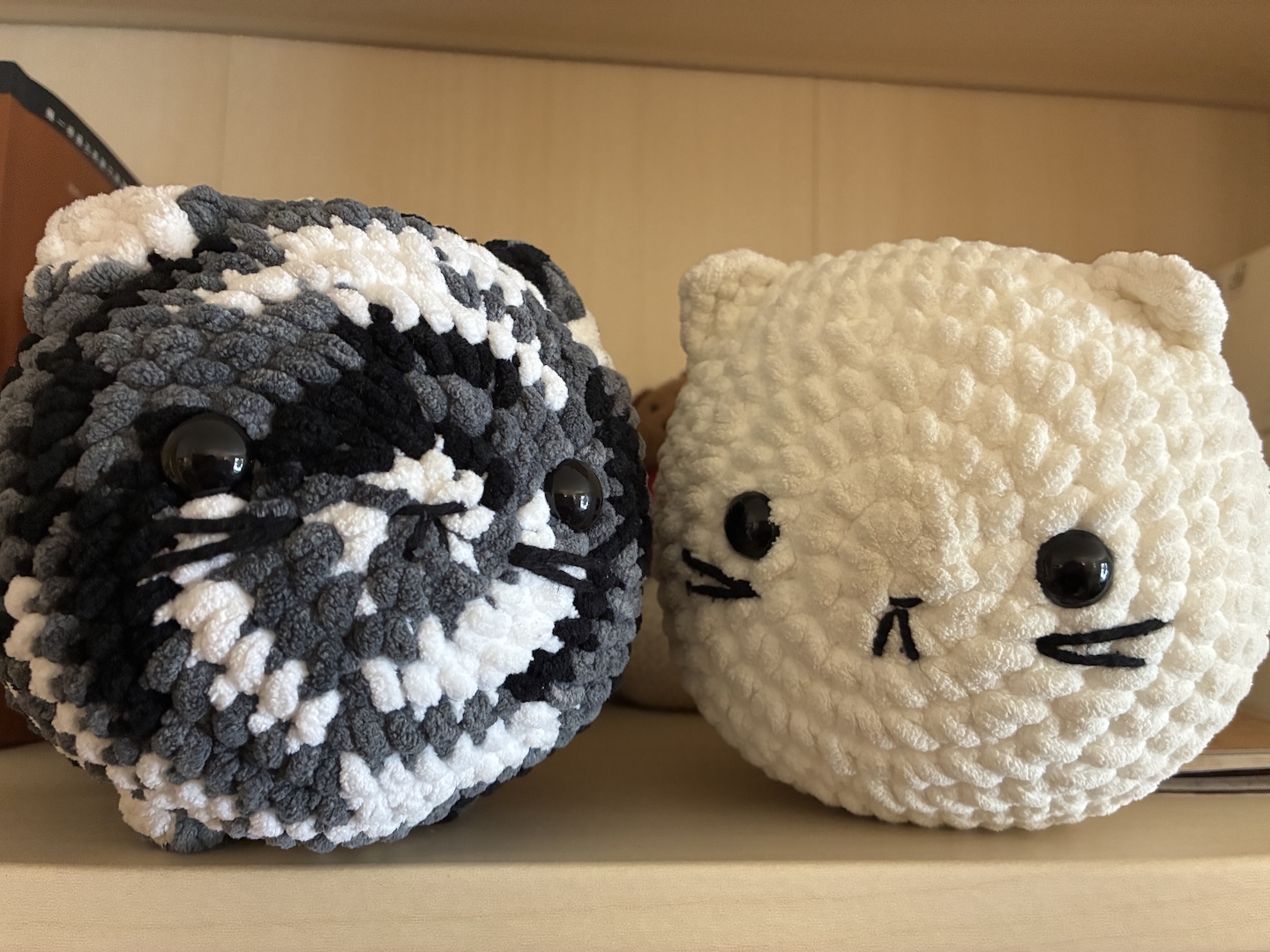
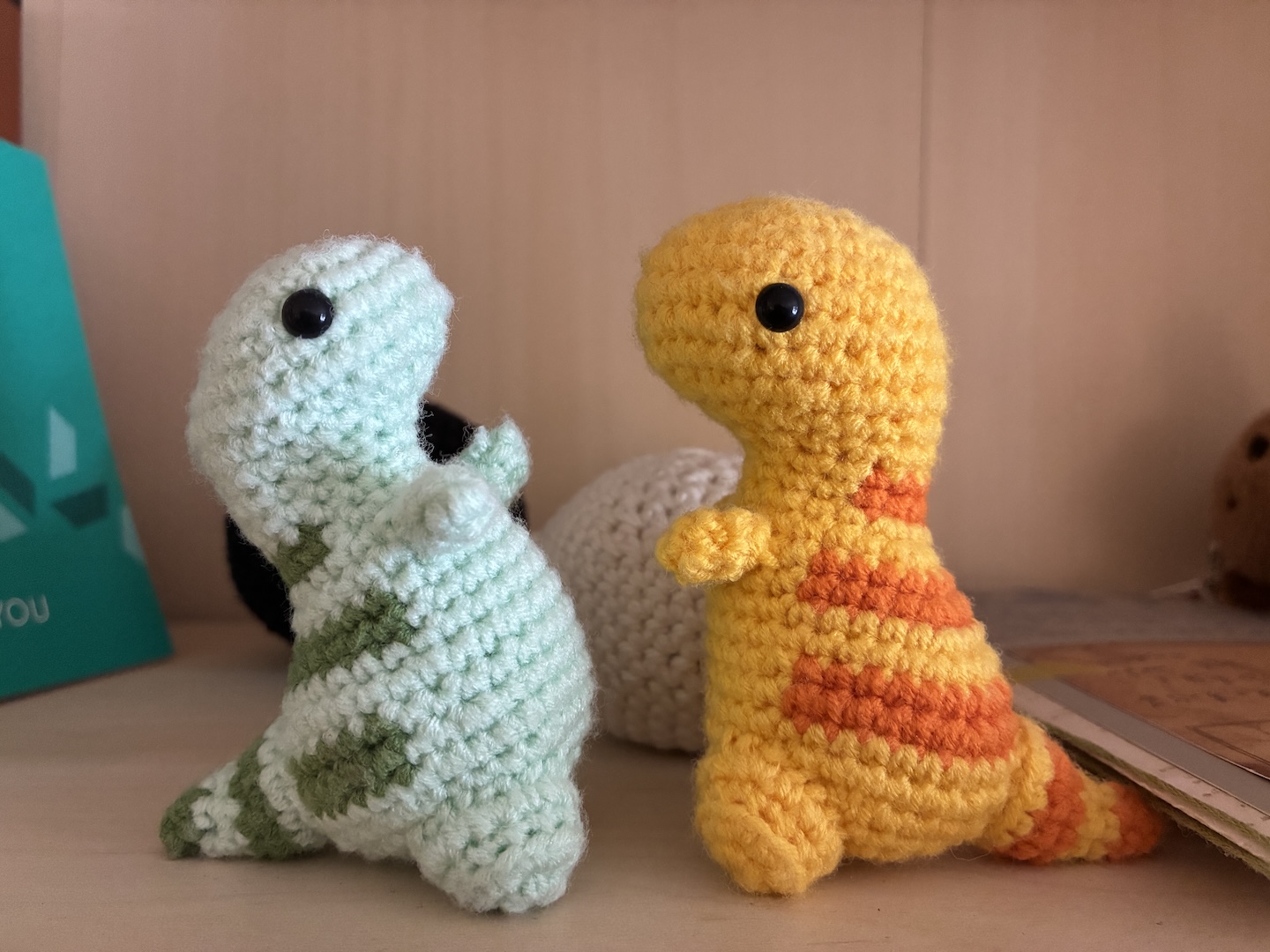
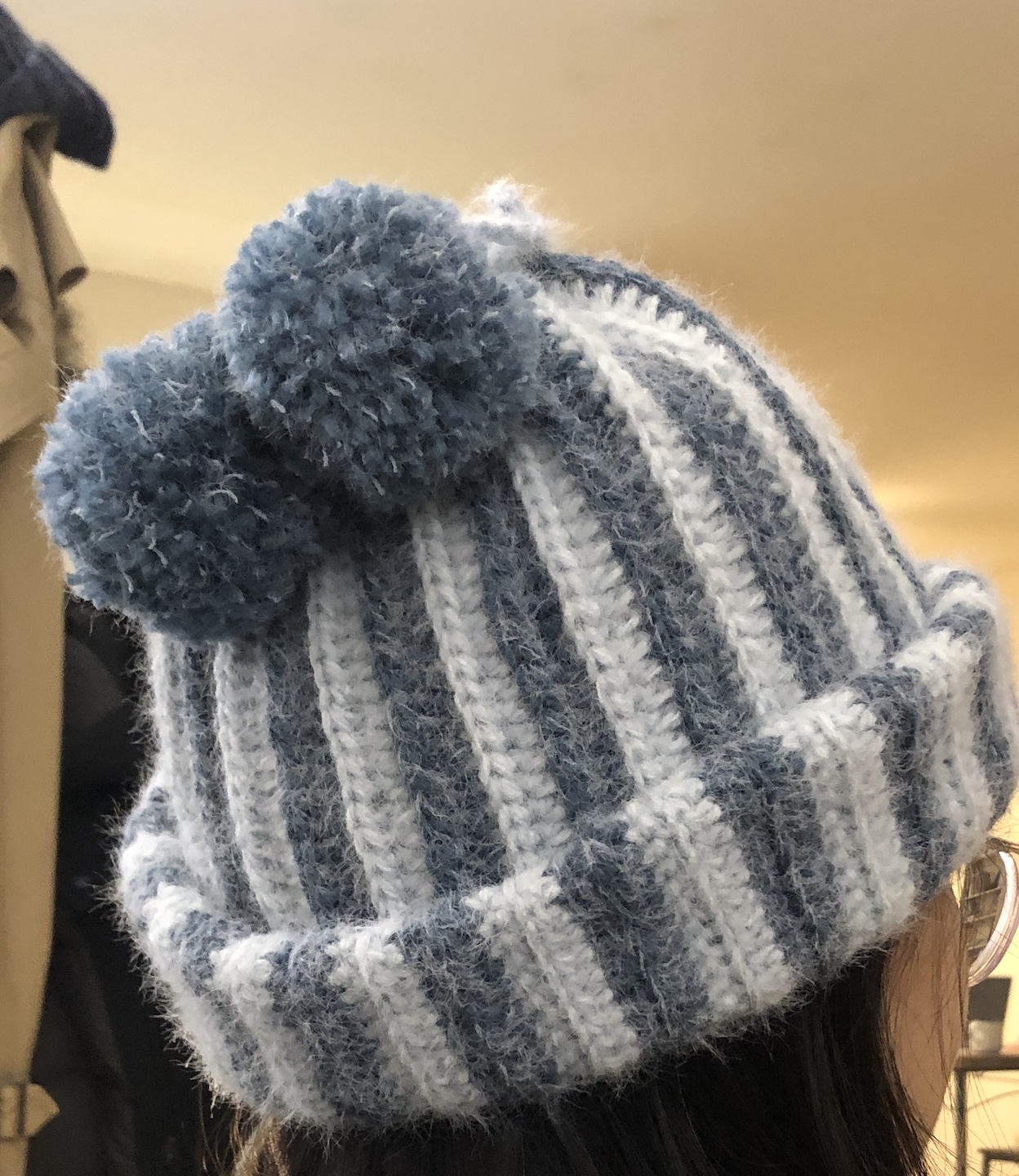
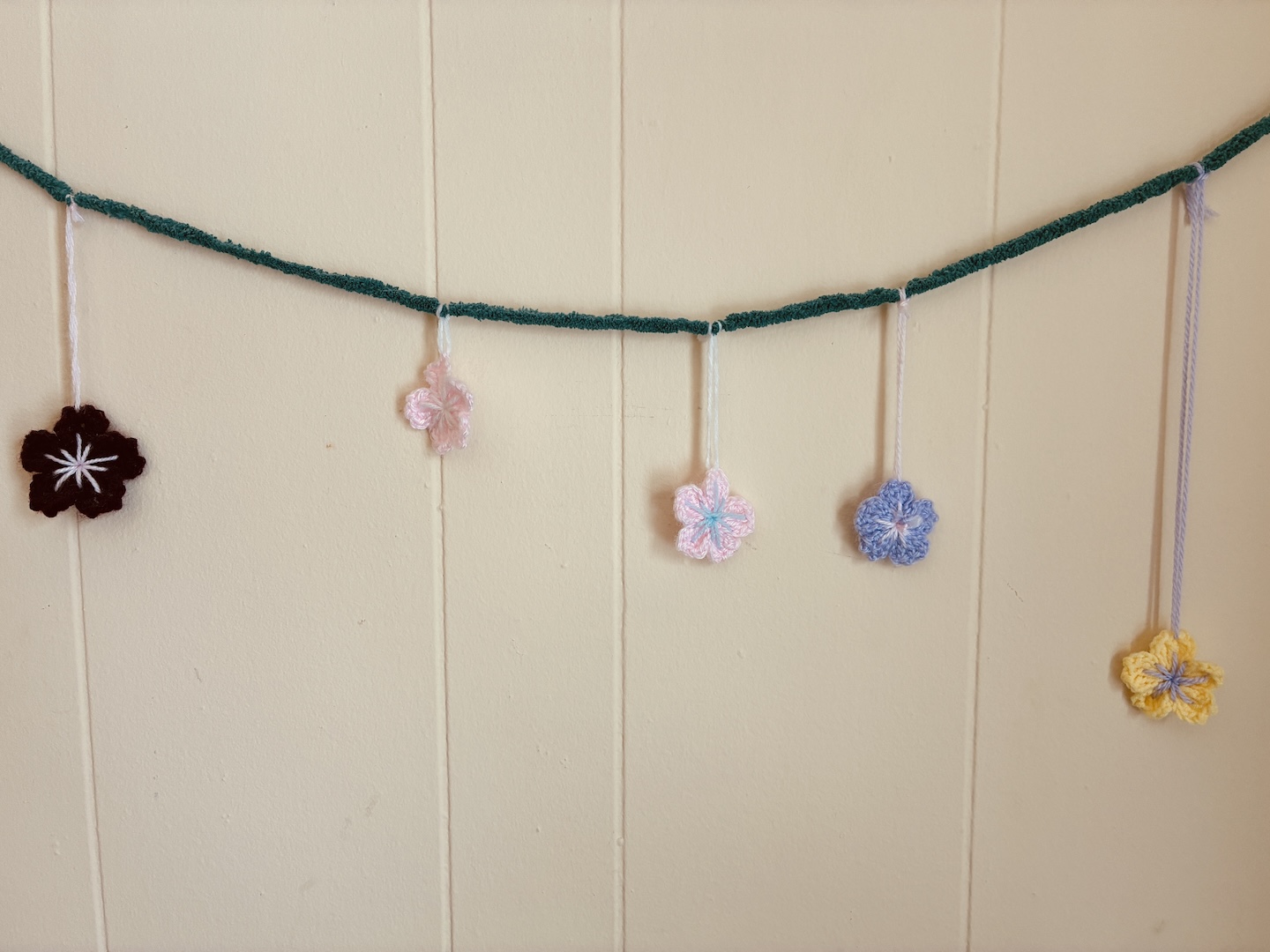
This rabbit hole keeps getting deeper, and its influence is huge—even Sam couldn’t help but learn along with me. He made Udon, and I made Sesame; he made two little dinosaurs, and I made a little turtle and a hat. We made a Christmas tree before the holidays and flowers during spring. You could say we are “hooked,” haha.
The Benefits of Crochet
1. Extremely Low Cost
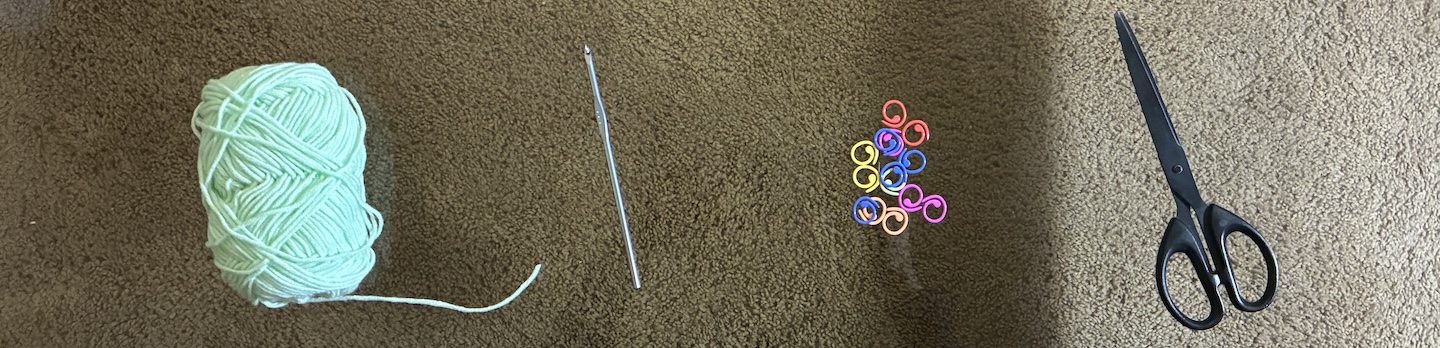
As mentioned, you don’t actually need much:
- Yarn
- A crochet hook (Knitting requires two needles, but crochet uses just one hook with a blunt tip)
- Stitch markers (To mark your stitches—don’t use safety pins, they’ll prick your fingers. Don’t ask me how I know.)
- Scissors (Something every household has)
If you want to make stuffed animals (amigurumi), you’ll also need:
- Safety eyes or embroidery thread
- Straight pins (To temporarily hold the limbs in place to confirm positioning)
- Fiberfill/Stuffing
If you want to tackle amigurumi or multi-colored projects right away, you can buy a pre-packed crochet kit. That way, you don’t have to worry about color matching or buying excessive materials. However, the unit price is higher, so use your discretion.
Note: I bought a yarn holder but later realized it wasn’t necessary. Maybe the one I got wasn’t heavy enough. It kept falling over while I worked. You can skip it.
2. Easy to Learn
YouTube is full of free tutorials. I recommend starting with Eveline’s Crochet Basic Stitch Tutorials. Once you master the basics, everything else becomes a breeze. Some items look complex, but the principles are simple. For example, cats and dinosaurs are usually made by crocheting the body first, then the limbs, and finally sewing them together. Plus, this skill is like riding a bike—even if you don’t pick it up for a long time, it’s easy to remember.
3. Great for Gifts and Personal Use
Crochet works are incredibly versatile: you can make a small ball for your cat, a little animal for a child, or something cute for yourself. Empty walls? Crochet some flowers to decorate them! Can’t find clothes in a specific color or pattern? Design your own pattern and make it! As for gifts, who wouldn’t love a handmade item? The warmth of something handmade is irreplaceable.
4. A Healthy Hobby to Pass the Time
Always felt that mindlessly scrolling through social media is unhealthy, but sometimes don’t know what else to do? Here’s a little secret: start crocheting! Unlike scrolling, which leaves you with nothing, crocheting results in a cute little fox, a squirrel, or a warm scarf. The sense of healing is hard to describe. And unlike the addictive nature of social media, crocheting isn’t an “addiction” you can’t stop—you can easily put down a half-finished project to do other things. Plus, it’s portable. Just toss a ball of yarn and a hook in your bag, and you can crochet while waiting for the bus, at the bank, or during your commute.
What does crochet have to do with mental health? A journal entry in PubMed answers this.1 In 2018, Australian researchers Burns and Van der Meer surveyed online crochet communities. Out of 8,391 valid responses, the majority (89.5%) felt that crochet brought them calmness. Furthermore, the effects were almost entirely positive (calm, happy, confident…), with only a tiny fraction reporting negative emotions (stress, worthlessness, or anxiety accounted for only 2.1%, 0.5%, and 0.4% respectively). Additionally, some people use crochet to help cope with major life events like the loss of a loved one, divorce, or serious illness.
There’s also a moderator on Reddit discussing how crochet helps them manage anxiety:
Whenever this (anxiety) happens I’m usually already crocheting or pick up my hook because genuinely crocheting makes me feel so much better i feel like it really helps to expel the nervous energy.
Someone replied:
Crocheting helps me focus on something other than my racing thoughts.
With a hobby that helps you stay calm and happy, why not give it a try?
5. Fun for Everyone—Young, Old, Alone, or Together
Do you think crochet is just for grandmas? That’s a lame way to think. Crochet is actually very trendy: you can crochet a painting, bags, or super cool clothes. Type “crochet art” into a search bar, and you’ll see many young artists making cool things you’ve never seen (like this anatomical heart—so cool!).
Beyond solo crafting, it’s great for groups. Lunar New Year is coming up—awkward family gatherings with nothing to do? Crochet together! Everyone focuses on their work, reducing the frequency of annoying questions. Because you’re doing the same thing, it fosters interaction and care (“Hey, I don’t know how to do this stitch! Can you check it for me?” “Oh, here you just insert the hook and pull the yarn through…”). Plus, there are crochet clubs in many places where you can meet people—just enough social interaction without it being overwhelming. It’s a very introvert friendly activity.
6. Training Creativity and Spatial Awareness + Passive Income
Once you move past the beginner stage, you don’t have to follow someone else’s pattern stitch-by-stitch. You can use your imagination to create something unique. This stage is challenging; it involves a lot of “frogging” (ripping out stitches) and restarting. By converting a mental image into a 2D or 3D object, you train your spatial awareness. Some people sell their original patterns on Etsy. I think this is brilliant: instead of selling finished items that take forever to make, a pattern is a “create once, sell forever” digital product—a great source of passive income.
Who is Crochet For?
To summarize, crochet is perfect for:
- People looking for an affordable new hobby
- People wanting to break a social media scrolling habit
- People with boring commutes
- People dealing with anxiety or depression2
- People wanting to train their creativity and spatial awareness
- People interested in passive income
- Introverts who want a bit of social energy without the drain
- People who want to give heartfelt, “warm” gifts
- People whose homes need more decorations or plushies
Conclusion
Come start crocheting together!
Afterword
I.
I made this video in Canva a while ago and am finally sharing it! It’s a collection of photos of Udon waiting for Sesame to be “born.” Cute, right?
II.
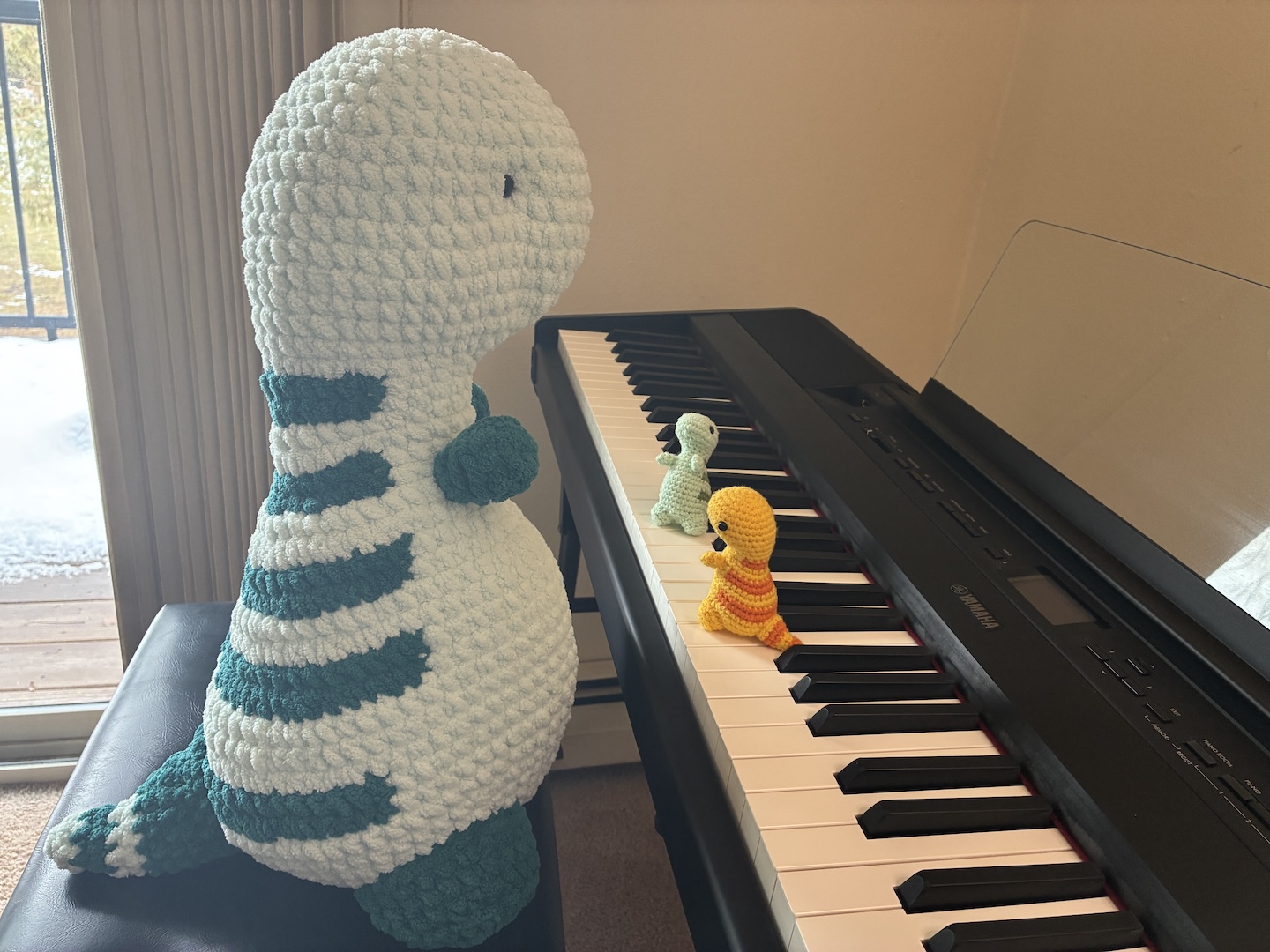
While I was writing this article, Sam finished crocheting this giant dinosaur. Isn’t it adorable? It’s so big and huggable!
NB: This article was first published in Chinese on 01/06/26. It was later translated with assistance from Typeless, edited by me, and published in English on 01/08/26.
Burns, P, and R Van Der Meer. “Happy Hookers: findings from an international study exploring the effects of crochet on wellbeing.” Perspectives in public health vol. 141,3 (2021): 149-157. doi:10.1177/1757913920911961 ↩︎
Crochet cannot and should not replace professional medical or psychological treatment. If you have mental health needs, please consult a professional medical or mental health provider. ↩︎