
Yesterday afternoon, I went to Chicago to hear Hayato Sumino’s (also known as Cateen) piano recital. Walking out of the hall afterward, I felt so contented and moved!
Cateen is a pianist I have followed for a long time. I especially love his own compositions, and Big Cat Waltz is just unbelievably adorable. One day in early August, while browsing his YouTube channel, I noticed in the description box that his next performance would be in Chicago. A same-day round trip by car would be no problem, and I even found great seats at a low price. Why hesitate? I pulled Sam along and bought the tickets immediately.
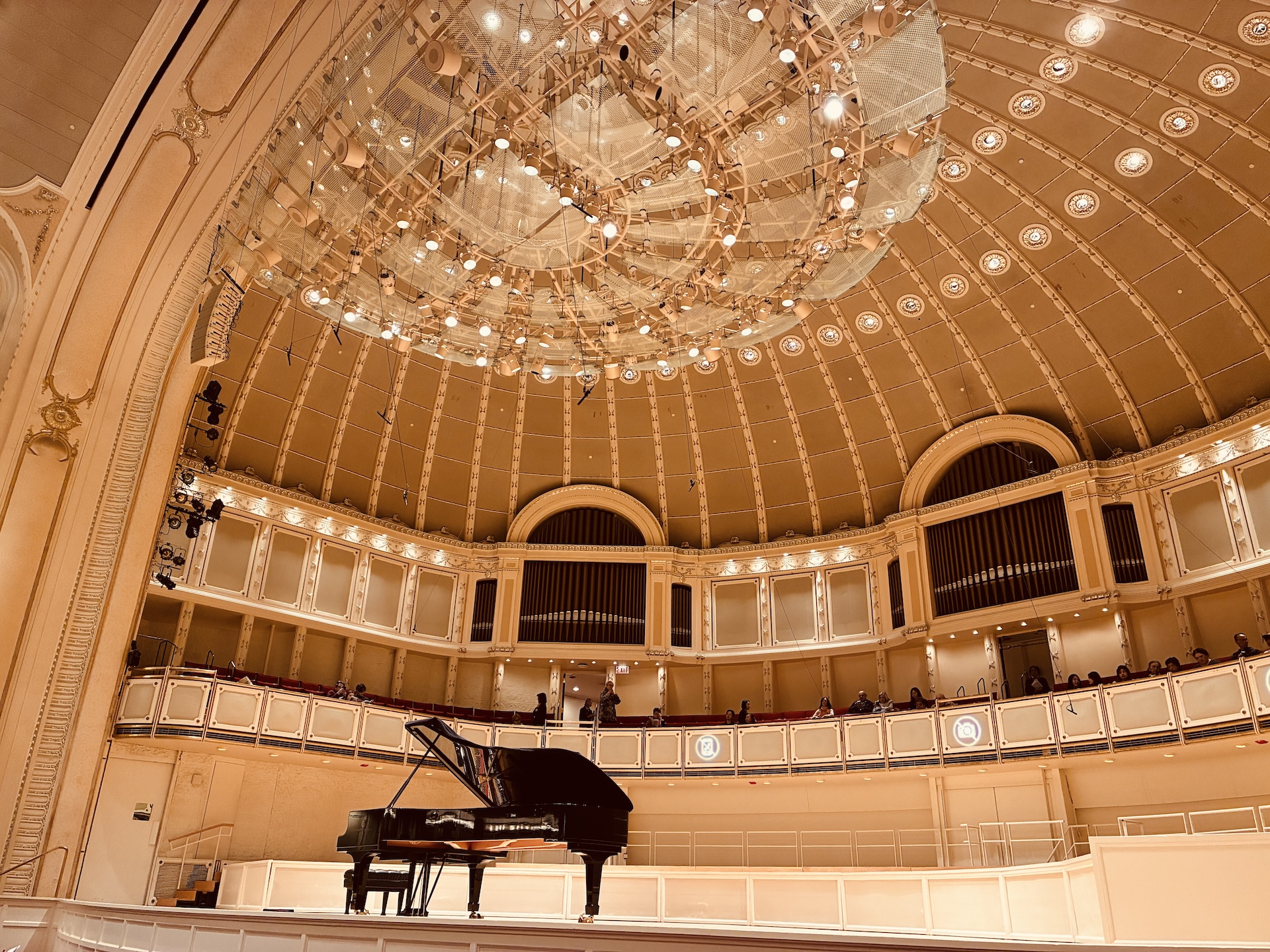
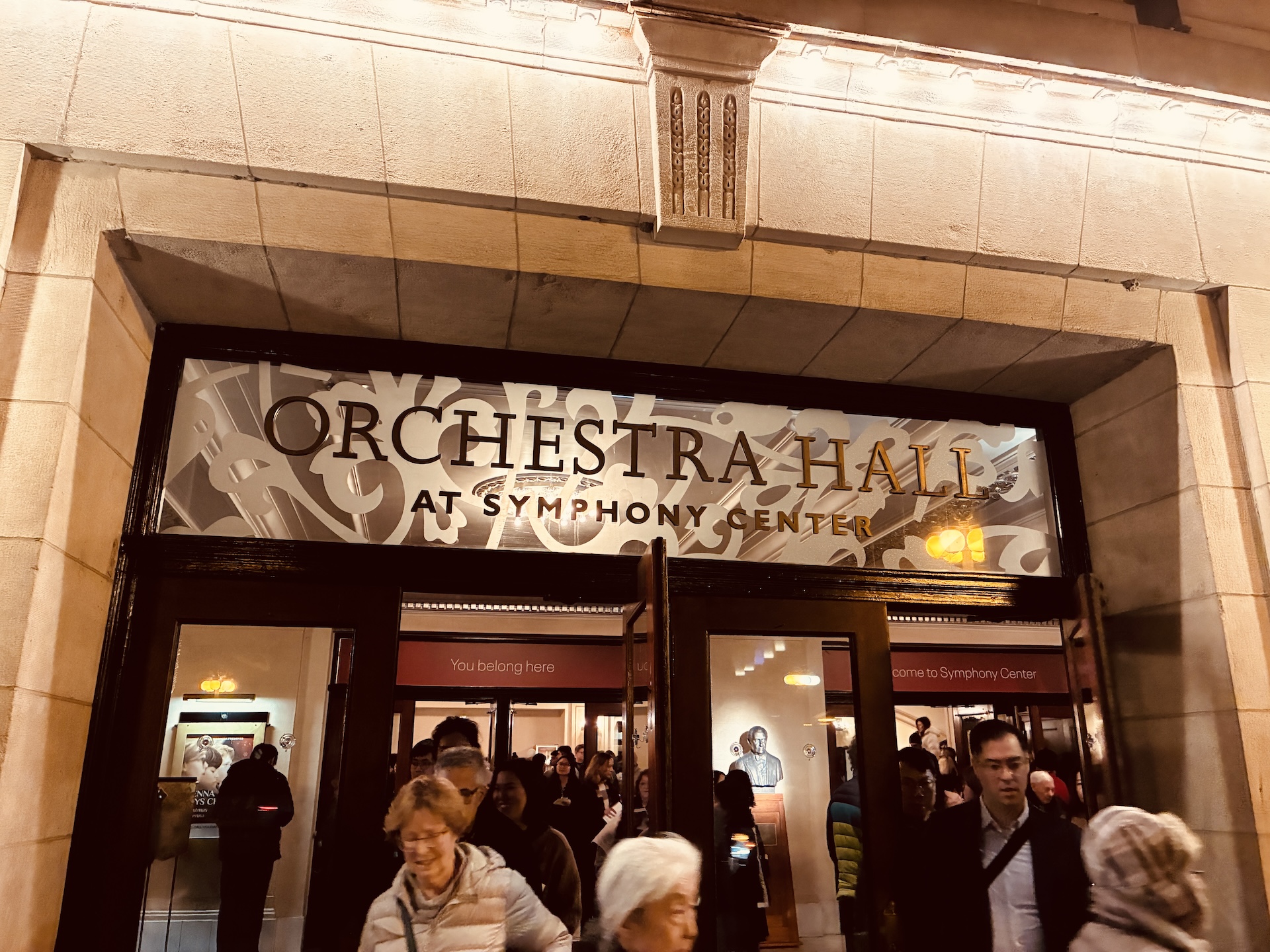
From early August to yesterday, whenever life felt ordinary, I would glance at the calendar and feel a small spark of anticipation. The thought that we would be attending Cateen’s recital in November added flavor to everyday life. When I finally stepped into Orchestra Hall at Symphony Center, the long-awaited moment had arrived. The anticipation had turned into reality, and it felt slightly unreal.
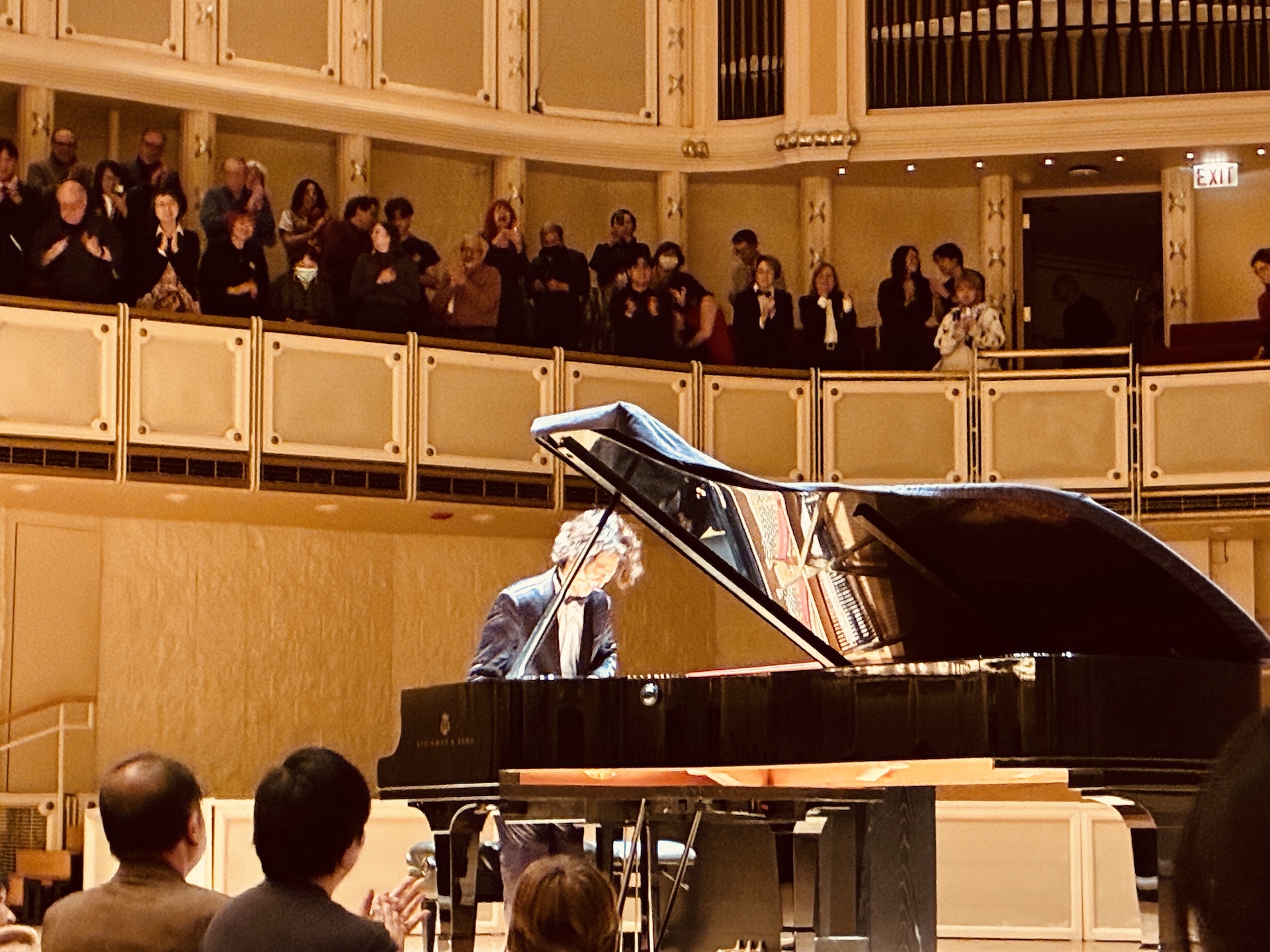
Unlike Taiwan’s National Concert Hall, where you wander through many turns and passages before reaching the auditorium, Symphony Center leads you almost straight from the entrance to the orchestra hall. The tickets we bought were among the cheapest at 29 and 39 dollars. Our seats were on the right side of the first floor, fifth row, facing the piano. Although we could not see his hands, the acoustics were excellent. They were clear and unobstructed, and even the softest tones could be heard well. We could also see Cateen walk backstage to drink water, and we could clearly see his expressions and his fluffy curls bouncing as he played. The ticket was good value for the money.
Cateen walked on stage and began playing before the applause died down. He opened with Bach’s Prelude and Fugue No. 1 in C major from The Well-Tempered Clavier Book II (BWV 870), then immediately continued with Partita No. 2 in C minor (BWV 826). As I listened, I sometimes thought about how I would play these pieces myself. The difference between me and Cateen became obvious. How could he make Bach sound so rich and multi-layered? My favorite movements from the suite were the Rondeau and the Capriccio. They were full of energy and color, so different from the earlier sorrowful pieces. When he finished, the audience burst into applause.
Next came Chopin’s Nocturne in C minor, Op. 48 No. 1, the first piece he played in the first round of the Chopin Competition four years ago. The moment the barely audible low C appeared, it changed the atmosphere of the entire hall. The once unrestrained emotions turned inward and became restrained and introspective. Then, without pause or hesitation, he moved straight into the Scherzo. As soon as he struck the first chord, the elderly lady in front of me jolted in her seat. I could not help but smile. It seemed a recital also tests the audience’s alertness.
Chopin’s Scherzo No. 1 in B minor, Op. 20, was the most moving piece of the entire recital for me. Cateen’s technique is extraordinary——fast passages remained articulate and crisp. His musicality is also remarkable——long phrases flowed like silk. Generally speaking, extraordinary techniques alone do not necessarily move the heart. So why was this piece played by Cateen so touching today? One reason may be that I had read the program book and learned about the background of the work. Chopin was under immense pressure in Vienna and could not return to his homeland, so he poured his emotions into this piece. Maybe it’s because I felt Chopin’s sorrow through Cateen. Or maybe I have heard many young performers play this piece in competitions while growing up, yet none played it with such subtlety and sensitivity. It was through Cateen that I rediscovered its beauty.
Perhaps it was all of these, or maybe I just saw reflections of my own past struggles and hopes.
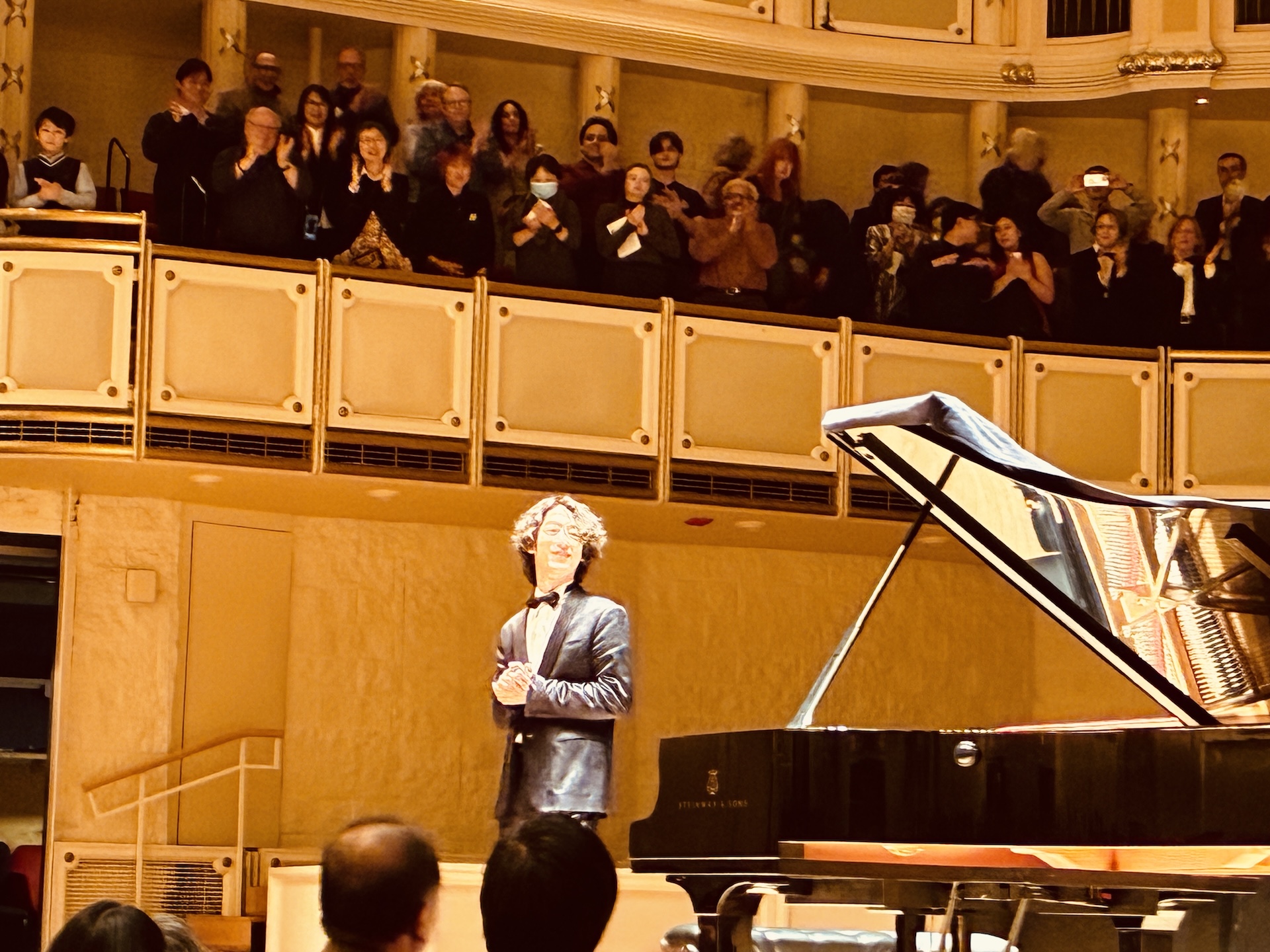
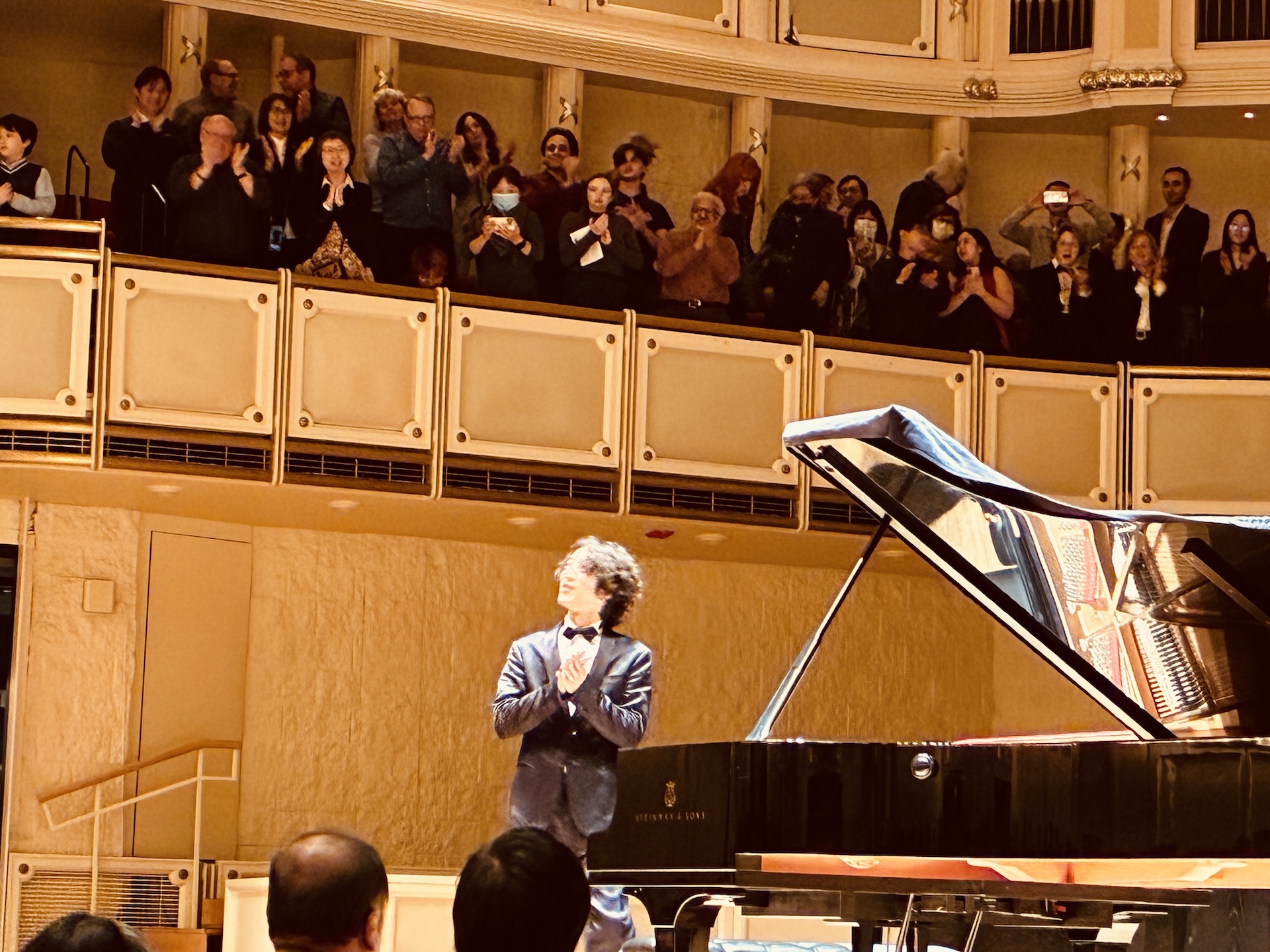
The first half ended, and almost the entire hall rose to applause. It was the first time in my life attending a recital where the audience stood before the concert even fully ended.
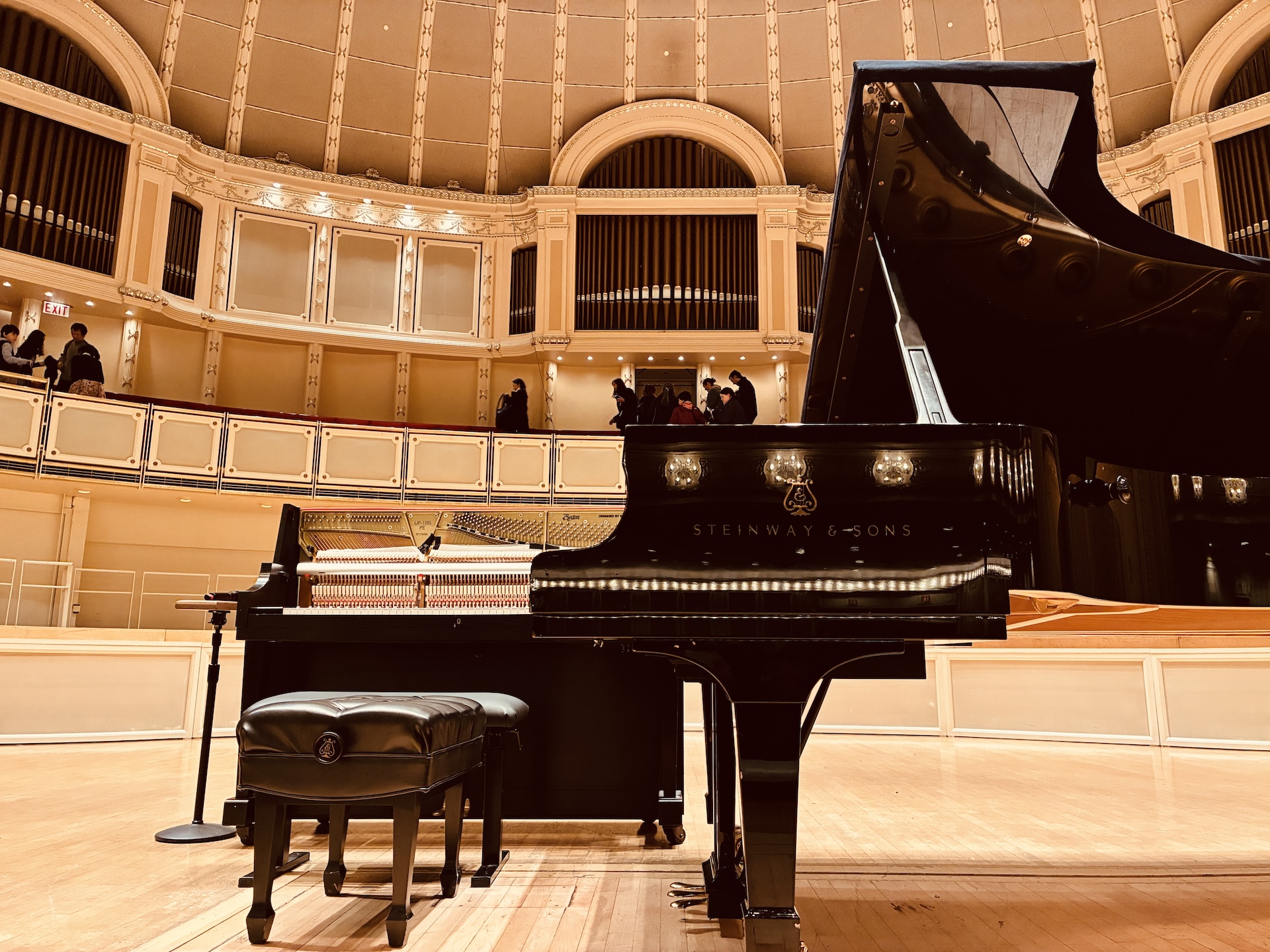
The second half started with Friedrich Gulda’s Prelude and Fugue. Gulda’s prelude reminds me of Bach’s Prelude in C minor from Book I (BWV 847), like Bach dressed up for Halloween and climbing out of the grave to dance. After this piece, Cateen stood up to speak. He said it was his first time in Chicago, which made me feel honored to be there. He mentioned that the upcoming pieces were his own compositions and that he chose to use an upright piano to evoke a nostalgic feeling. The final piece would be Ravel’s Boléro arranged for two pianos. He added with a grin, “Although there are two pianos, I still only have ten fingers.” Everyone laughed.
His works New Birth and Recollection, tributes to Chopin, were played on a grand piano and an upright piano respectively. I again felt grateful for our seats. I could clearly hear the difference in tone. Upright pianos are naturally softer, and even with the lid removed, its volume was much lower than the grand. Sitting here meant holding my breath to catch every note. The sound of Recollection felt like blue bubbles rising from the sea, hazy and shimmering, occasionally sparkling with delicate high notes like glints of sunlight seen underwater.
The second half passed quickly. After Recollection, Cateen played five of Kapustin’s Eight Concert Etudes, followed by three of his own nocturnes, and finally Boléro.
It’s hard to imagine how much physical strength, concentration, and mental stamina a pianist must have to perform a recital like this. Placing Boléro at the very end and then still playing three encores afterward, including Chopin’s Etude in C major Op. 10 No. 1 and Cateen’s own “Twinkle Twinkle Little Star Variations,” was astonishing. His stamina and focus were incredible.
As Boléro neared its end, I felt a quiet ache, not wanting the performance to reach its final note. Music is beautiful because it condenses beauty into a brief span of time. Yet this is also the painful part. Maybe this is why I write. Writing, though it may feel like a futile attempt, lets me decode beauty and translate it into words in order to extend its life.
When the concert ended, cheers filled the hall. Almost everyone stood again. Sam told me that he had become a fan as well. Nothing delights a fan more than converting the people around them.
It has been a long time since I last heard a concert that moved me like this. More than good techniques, Cateen’s love for music could be heard in every note he played. He is someone who enjoys playing the piano, a composer full of passion and hope for music and for life. Not every musician is like this.
I just want to rush to my piano and practice.
NB: This article was first published in Chinese on 11/18/25. It was later translated with assistance from ChatGPT, edited by me, and published in English on 12/3/25.